

Goodmorning everyone! Thanks for your patience, last week was so busy I couldn’t send out a newsletter. This week I have more time. Soon I will travel to India and I hope to see and report on the many nice things there.
Let’s go:
🇳🇱 De Nieuwe Zaak “Unfiltered Event”
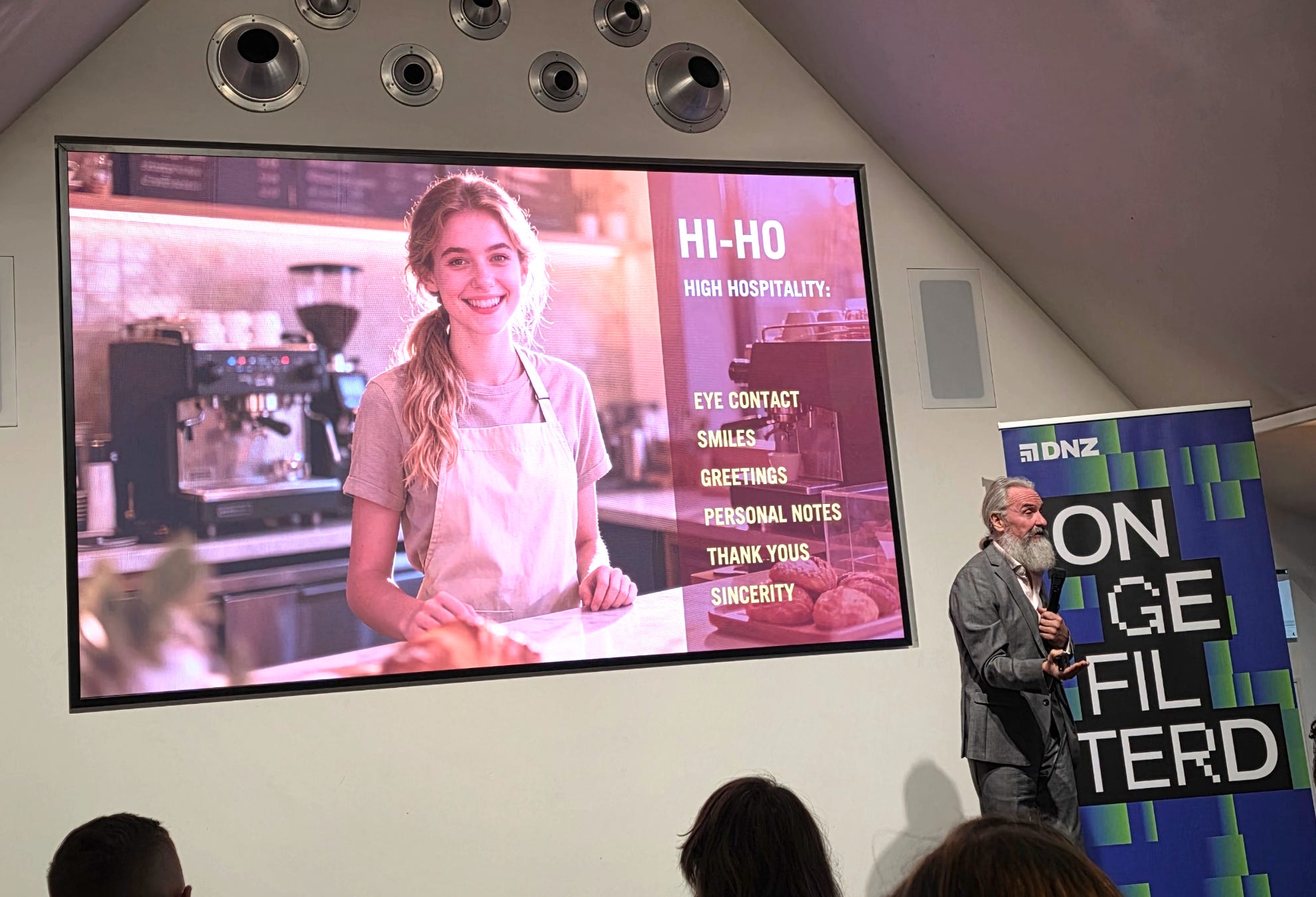
I was at a conference last week, at a great location: the Heineken Experience. There with the “freshest beer available” in the country, we could watch several interesting speakers. This one I highlight.
It’s Howard Saunders and he does great talks on retail, remarkable man entertaining to watch.
His main message: “Are you building a system, or a relationship with your customer?”. Dawn Gribble great slide for your substack as well, I think 😉.
As a contrarian he made the audience think reverse on the current AI boom.
Some things he said:
Convenience is no longer enough: pure efficiency, speed, and convenience have become baseline expectations rather than competitive advantages. If a brand only competes on selling faster and cheaper through automated systems, it becomes interchangeable and loses its soul.
“AI will make authentic human connection the most precious currency”: As bots and AI agents increasingly handle searching, comparing, and ordering, consumers crave real human emotion, storytelling, and connection more than ever. A little “friction” or human interaction is actually what makes an experience memorable and valuable.
HI-HO (High Hospitality): To counteract cold automation, Saunders urges retailers and brands to invest heavily in the human basics.
Another fun picture (typical British, I would say), he showed was:😅
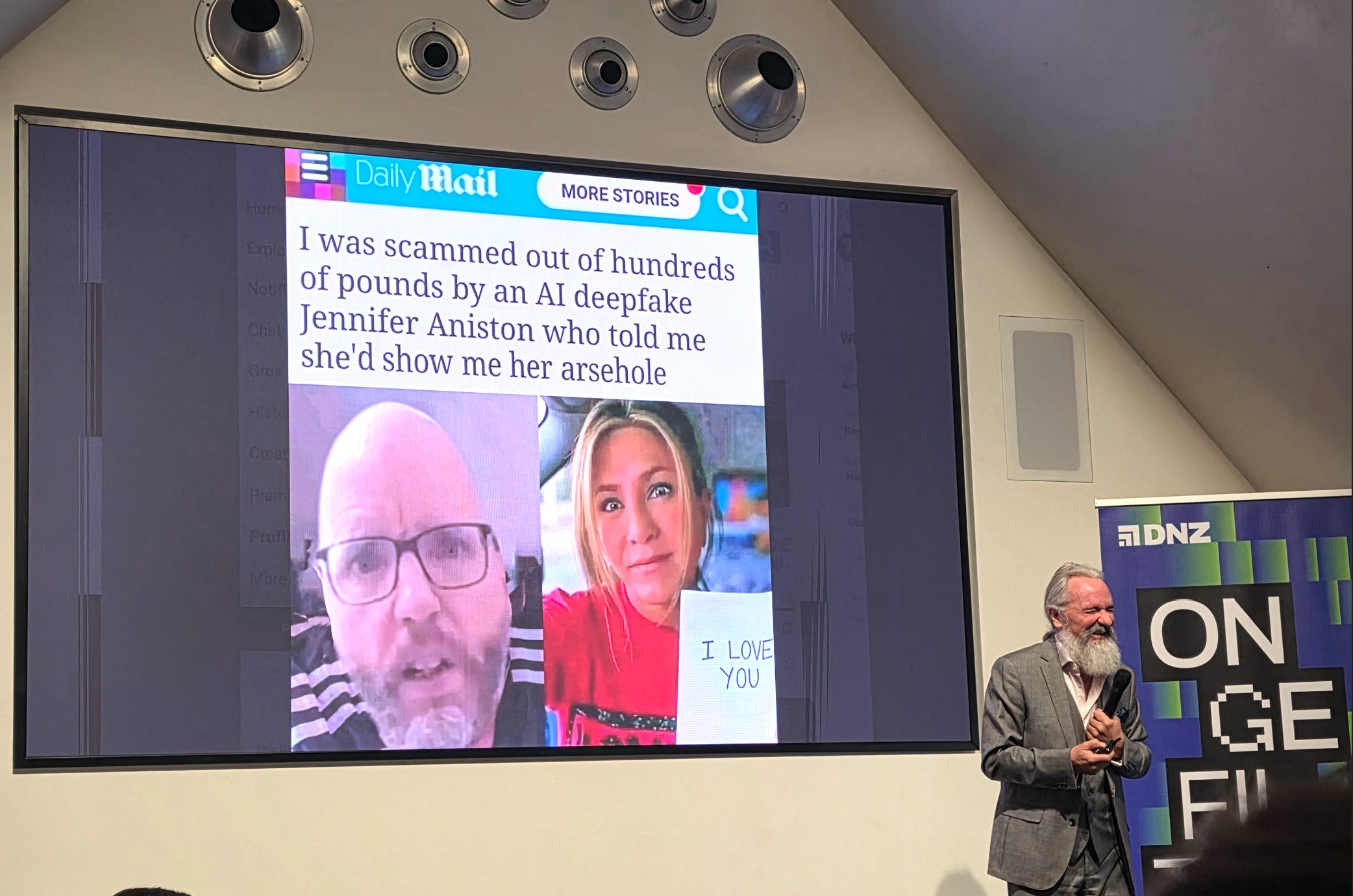
And this video, Howard showed, also made me think, as I often ask AI which clothes matches me😅
🦷Colgate and synthetic customer research
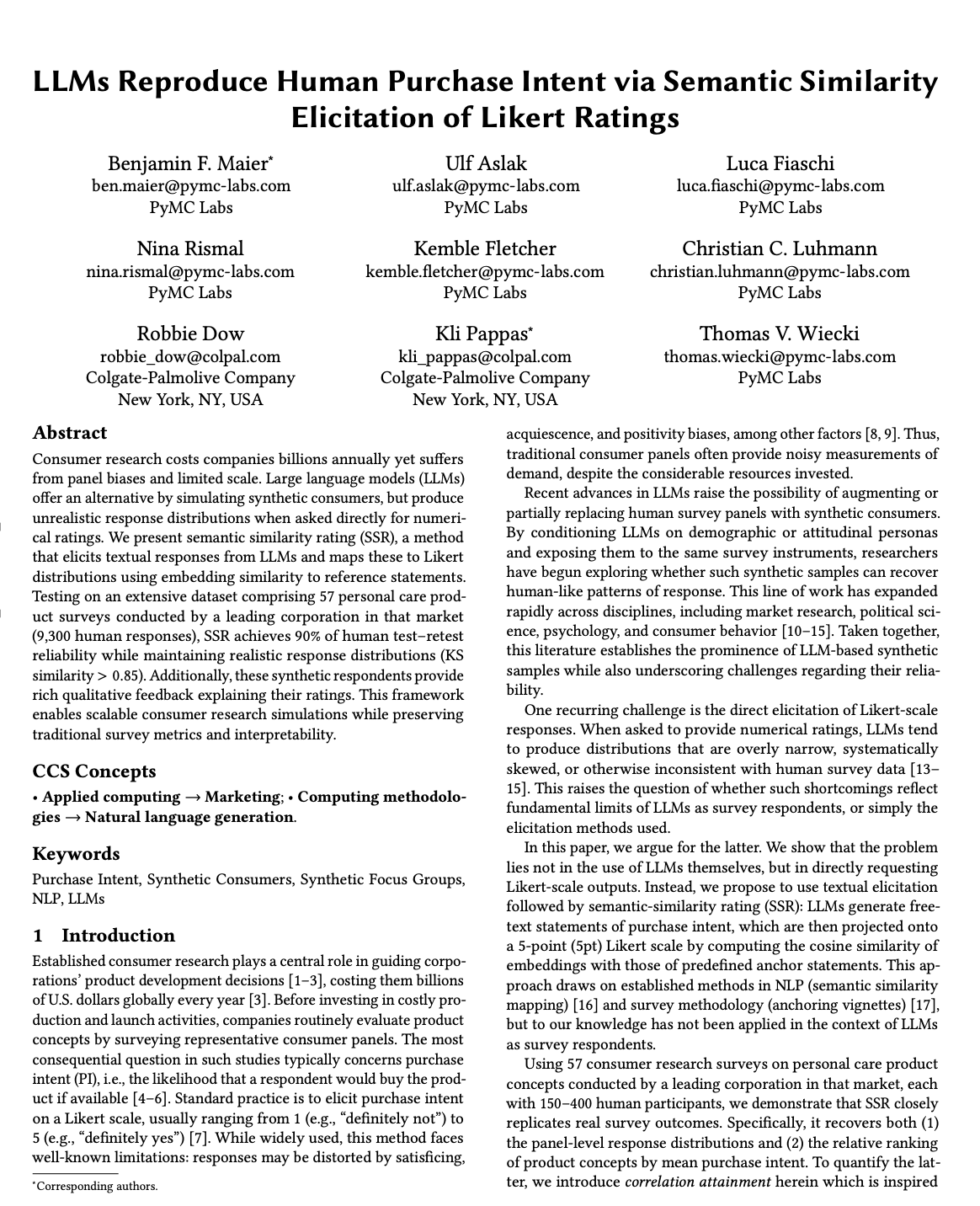
This one I found the other week. Very interesting because it helps you think how to use AI research tools. It’s not always a standard and simple prompt. You probably remember I wrote on synthetic customers and also here when I found a startup in synthetic customers in Istanbul.
Now Colgate (yeah the toothpaste giant) published a paper on a way how to use synthetic customers. The good thing is that I think you can test it yourself at low costs. Both for yourself or clients.
So what’s it about:
LLMs make bad survey respondents when you ask them for a 1–5 score, but much better ones when you let them answer in words and convert that text to a score with embeddings. That gets you about 90% of the way to how consistent real humans are with themselves.
What they did (in bullets)
Human data: 57 personal care product concept surveys from a large corporation, with 150–400 U.S. participants each (9,300 total). Purchase intent was rated on a 5-point Likert scale.
Models: GPT-4o and Gemini-2.0-flash.
Synthetic consumers were prompted with demographic attributes (age, gender, location, income, ethnicity) and a product concept, usually as a full concept image.
They compared three ways of asking:
Direct Likert: “rate 1–5”.
Follow-up Likert: the model answers in text first, then gives a score.
SSR: the model answers in free text, and the system scores it.
How SSR (semantic similarity rating) works: the free-text answer is projected onto a 5-point (5pt) Likert scale by computing the cosine similarity of embeddings with those of predefined anchor statements.
So if you want to copy or try a generic way of doing probably you can think of something like this:
A brand has 40 product concepts or ad angles and budget to test 5 with real consumers.
Build personas that match your target market (age, income, region, maybe even behavior on a site).
Show each persona the concept (image plus short text) and ask “would you buy this, and why?” in free text.
Map each answer to 1–5 with SSR. The open-source implementation is on PyMC Labs’ GitHub.
Rank the 40 concepts, drop the bottom 30, and read the “why” comments to improve the top 10.
Test the best 5 with a real human panel, and compare the results to calibrate your synthetic setup.
Cool right? I think so.
🇹🇭 Thailand $1,500 and 54 million views
I always like creative things that does not cost a lot of money but can have huge success. It unlocks creativity, use of latest techniques and can have big impact. But you need to test and try. Here is a nice example from Thailand. Not retail, but still it’s nice to read I think.
It’s about a Thai movie called “the useful ghost”. A woman dies from dust pollution and comes back as a ghost living inside a vacuum cleaner, to stay close to her grieving husband. This movie won a price but Thai people skipped it (even the trailer).
Now the fun thing comes, the small studio behind it, 185 Films, tried something different. They handed the plot to Cojohn, a Thai prank creator, who acted out the same story: haunted vacuum cleaner and all, as a hidden-camera stunt on the streets of Bangkok. The video got 54 million views on a $1,500 budget, and the trailer itself won the Grand Clio for creative effectiveness.
What I like: they didn’t make a better trailer, they gave their story to someone who speaks the audience’s language. Now I see this as a cousin of the “clipping” trend, where brands hand material to creators who cut and spread it. Big in the US and Asia, still early in Europe (so tap into that retail brands!💡) For e-commerce and marketing brands, I guess the question is : what could a creator do with your product if you let go of control? Or what would you do yourself if you don’t have the (brand) boundaries?
🇹🇼 Taiwan 2 monthly lottery on all purchases, did I win?
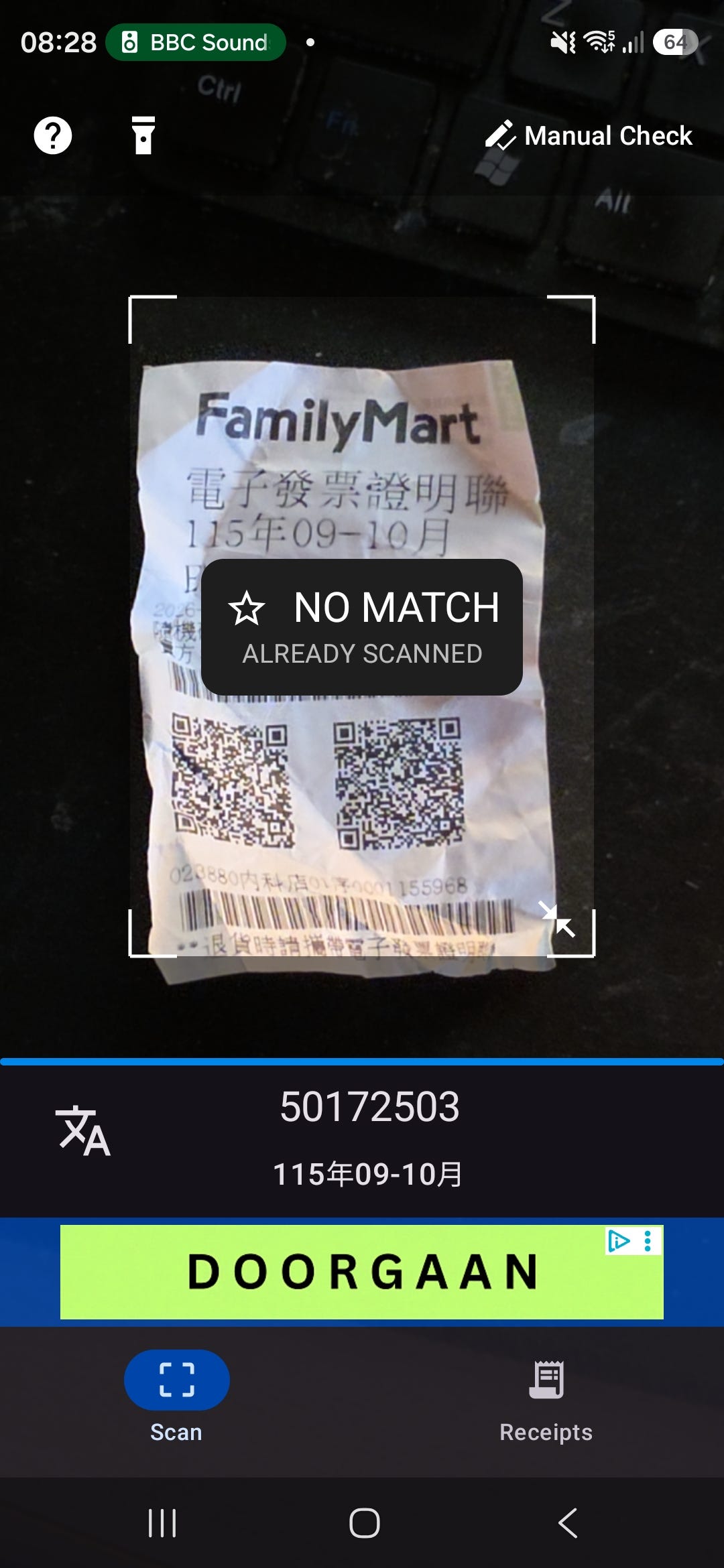
Do you remember I was in Taiwan a few weeks ago? I wrote a lot on retail and commerce in Taipe. Did you know in Taiwan every purchase is also a lottery ticket? Every two months they draw the winners. There are no additional costs, every receipt counts. The main prize per draw is more or less US$319,000.
Of course there are apps for that and also tourists like me can participate.
They created this system to stop tax evasion and from what I read, in its very first year, the program boosted Taiwan's sales tax revenue by 75%, essentially paying for the lottery prize pool itself. Mostly is purely digital now, but as I tourist I still got paper tickets. Unfortunately I did not win, but a fun system in my opinion, also encourages to consume.
More on Taiwan and retail you find in earlier editions of this newsletter, for example here:
Global Digital Marketing & Retail by Alex 156

Good morning!! A new edition of my newsletter. This week with an update from Taiwan, where I currently am, and some other interesting developments in the world of e-commerce and phygital. At the end of today’s newsletter, Matthew Ryan a marketing expert in Taiwan, shares why Taiwan should never be treated as part of a China strategy.
🔍 Attribution and factuality in Search generative AI features
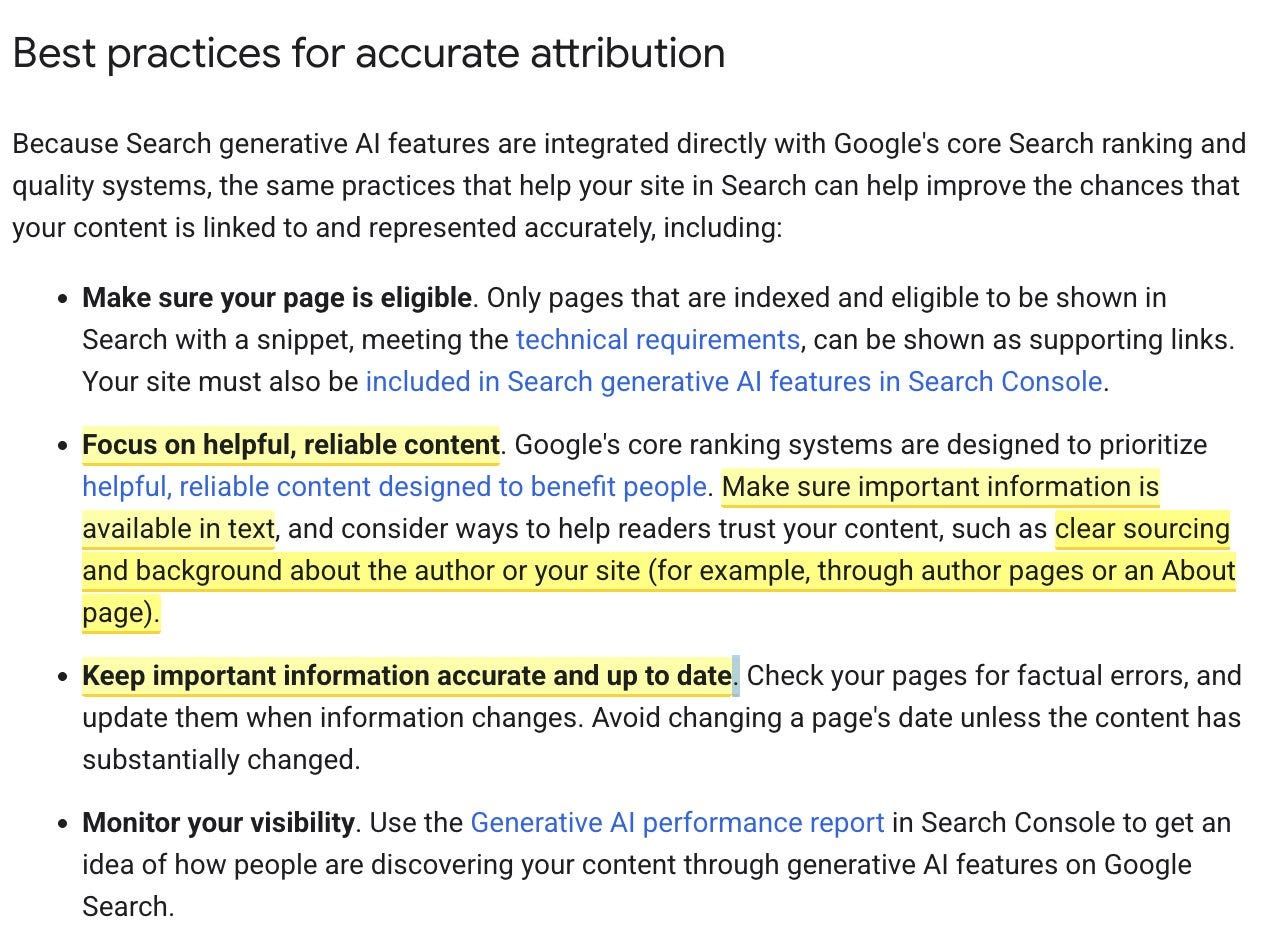
Marie Haynes is on fire recently with some very good Google insights posts. Google published a document recently that is worth reading into. The document is called, "Attribution and factuality in Search generative AI features."
So in essence (and do remind this):
Google is saying that AI Overviews and AI Mode aren't a separate system. They sit on top of normal Google search. Your page first has to rank (or at least get retrieved) for the query or one of its sub-questions. Then it has to say something that other trusted sources confirm. Only then does it get cited.
Normal search runs first. Google takes the query and pulls results from its regular index with its usual ranking and quality systems.
Query fan-out. The model breaks the question into sub-questions and runs extra searches for each one. For "best commercial fridge for a small bar", that might mean separate searches for size, energy use, glass door vs solid door, and price range. Each sub-question gets its own set of results, so it's another way into the answer.
Grounding. Gemini writes the answer using those retrieved pages as its source material. It isn't supposed to answer from its own memory.
Corroboration. Each claim in the answer is checked against other reliable sources: other web pages, data feeds and the Knowledge Graph. If only one site says something, it's weaker than a claim several sources agree on.
Citation. Google links the pages that support each part of the answer, and places the links where they're most useful to the reader. That means you're cited for a specific claim, not for being on page one.
Do also known that human raters in A/B tests check two things: whether the cited page really supports the text next to it, and whether that page is actually useful to the user.
So organic ranking still #1 to do. Cover sub questions, the fan-outs, make facts consistent and outside your own ecosystem. Freshness is important and setup author and about pages.
Details:
https://developers.google.com/search/docs/fundamentals/gen-ai-attribution-factuality
🦾Grokbot acts a bit like a CRM to me


Is this the future of shopping? Grokbot sent me a push message out of the blue (I didn't ask for it) about Black Friday deals. One tap on a prefilled "find me the best Black Friday deals" and I got a list.
Take a look at the screenshots, It told me to skip the Switch 2 because it was cheaper earlier this month, flagged the iPhone 16 as refurbished, and pointed out a bunch of "deals" that were no cheaper than in October, using Tweakers and price trackers as its sources.
So first, the AI just took over the push notification that Coolblue and MediaMarkt normally send themselves. Second, fake Black Friday discounts don’t survive an assistant that checks price history.
The retailers that showed up were the ones with verifiable prices.
One deal got a weaker mention simply because the bot couldn’t open the store page.
No ordering yet, but that’s clearly the next step. I just emphasize again, make sure your product data is in order and can be read by LLM’s. You increasingly see the importance of it.
This is GrokBot acting a bit like a CRM, not MediaMarkts or Coolblues CRM! This relates exactly to another talk on the earlier mentiond “Unfiltered’ event and that’s this one a slide explained by Kristina Pototska.
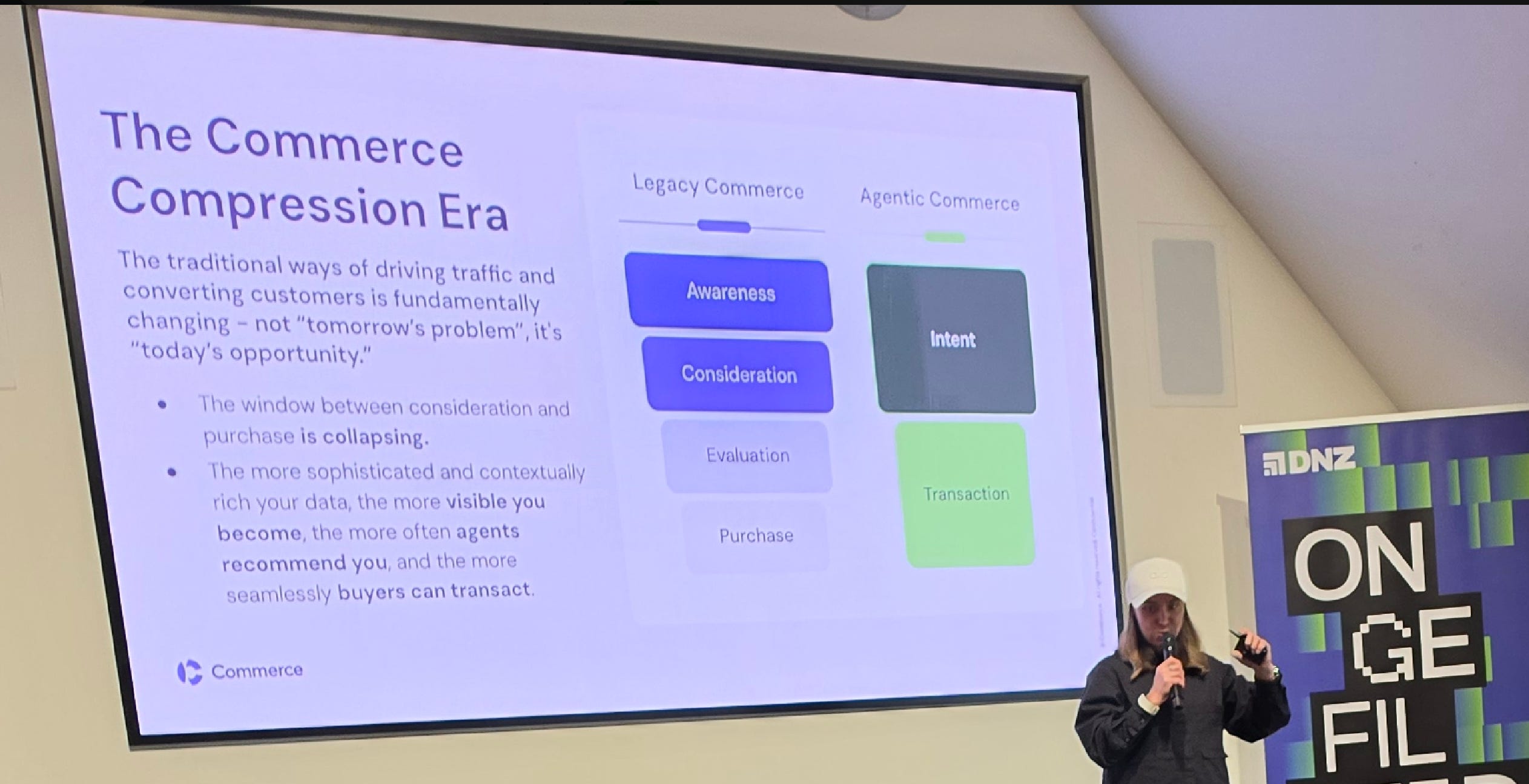
When shoppers use AI agents (like ChatGPT, Perplexity, or autonomous shopping assistants), the middle stages vanish.
I can only recommend these type of events from “de nieuwe zaak”, as I understood there is one again in spring.
Details: https://www.denieuwezaak.nl/ongefilterd/de-feed-die-je-webshop-opvreet
Ok, that’s it for today! Hope you enjoyed it.
Thanks for reading Crossborder Alex : Global Marketing & E-commerce! Subscribe for free to receive new posts and support my work. See you again in the next edition I hope. Thanks for supporting it really matters a lot to me!
Interested in more? Checkout my archive!
Use my vibe coded search engine to find content tailored to you, I improved the search engine a bit.
Do you want to support me? Consider taking an American Express Card via this referer URL. It benefits us both and makes it possible for me to travel and share more on this substack. Thank you. American Express is -also in Europe- a great way to get travel perks but you really speed up the points and perks by referals.
The receipt lottery paying for its own prize pool is the bit that stays with you: a tax-compliance tool shoppers actually want to use. Did the online shops you bought from in Taiwan ask for your phone barcode at checkout too, or was that only in physical stores?