

Goodmorning! New week, new newsletter. Let’s see what I found interesting to read this week! Check it out and thank you for liking, subscribing and reading!!
🖩The future of marketing measurement
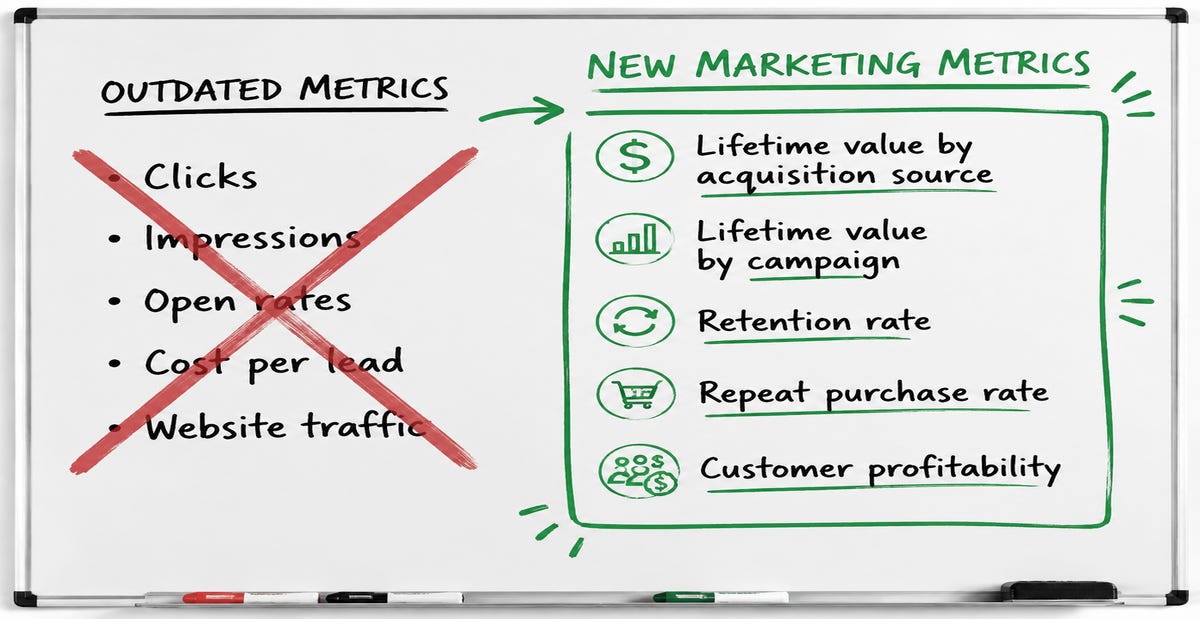
I received this very well written article from a collegue and I think it’s spot on! Michael Timmons explains why traditional measures like impressions and clicks are no longer enough. Now readers of this substack already know that, but this article might just be such an article that you can refer to in a strategy session or that you can distribute among your less digital savy collegues.
For years, marketing teams celebrated metrics that looked impressive in reports but often had little connection to actual business growth.
The campaign generated 500,000 impressions. Great. How many customers did it create?
A social post earned 10,000 likes. Excellent. Did it increase revenue?
A landing page produced a 20% conversion rate. Fantastic. Did those conversions become profitable customers?
The problem isn’t that these metrics are bad. The problem is that they only measure attention, not impact.
Thank you mr Timmons for writing that all down. Checkout all details via:
🇸🇬 7-11 Singapore is changing: convenience is no longer enough

I like convenience stores, not in the Netherlands,but in Asia. Like in Japan, Singapore or Taiwan. For sure in a few weeks I will dive into the Taiwanese convenience stores. This week I discovered this article about Singaporean’s 7-eleven’s, an interview with Josephine Luo.
Things are changing in “convenience store land” due to the rise of quick commerce:
For decades, convenience was 7-Eleven’s greatest competitive advantage. Today, it’s simply expected.
Consumers can have groceries delivered within the hour, discover viral snacks on TikTok before they hit store shelves and order meals with just a few taps. As convenience becomes increasingly commoditised, retailers can no longer rely on proximity or speed alone to stand out. That shift is prompting 7-Eleven Singapore to rethink what convenience means.
I think there are things to learn here, quick commerce will only rise also in other parts of the world, here in the Netherlands -and for sure we are not a trailblazer- Amazon offers nowadays in many places same-day delivery on orders before 15:00, and I regularly use Flink to get groceries delivered in under 15 minutes (especially when the weather turns bad).
"Discovery for us is all of it - it's what makes a visit to 7-Eleven a little more interesting and rewarding. That could be a new ready-to-eat meal, a viral drink or snack, a collectible you cannot find anywhere else, or the buzz of a seasonal launch or collaboration," she said.
"What we are doing is adding little moments of surprise into our customers' routine without compromising the convenience and reliability that brought them in the first place," Luo said.
Rather than viewing TikTok or food delivery platforms as competitors, Luo sees digital channels as the starting point of the discovery journey.
This shift mirrors what JD is doing with physical retail in China (which I’m also visiting soon). Instead of relying on traditional shopping centers, JD is putting its own twist on the concept transforming large malls into tech showrooms, experiential hubs, and local lifestyle destinations.
Details:
More pictures from the Japan -beer bar- convenience store here:
https://www.linkedin.com/pulse/retail-inspiration-japan-alex-baar-clhwf/
More on JD malls transformation here in an earlier edition:

🤖 Content prioritization in the AI Era : Handy prioritization matrix
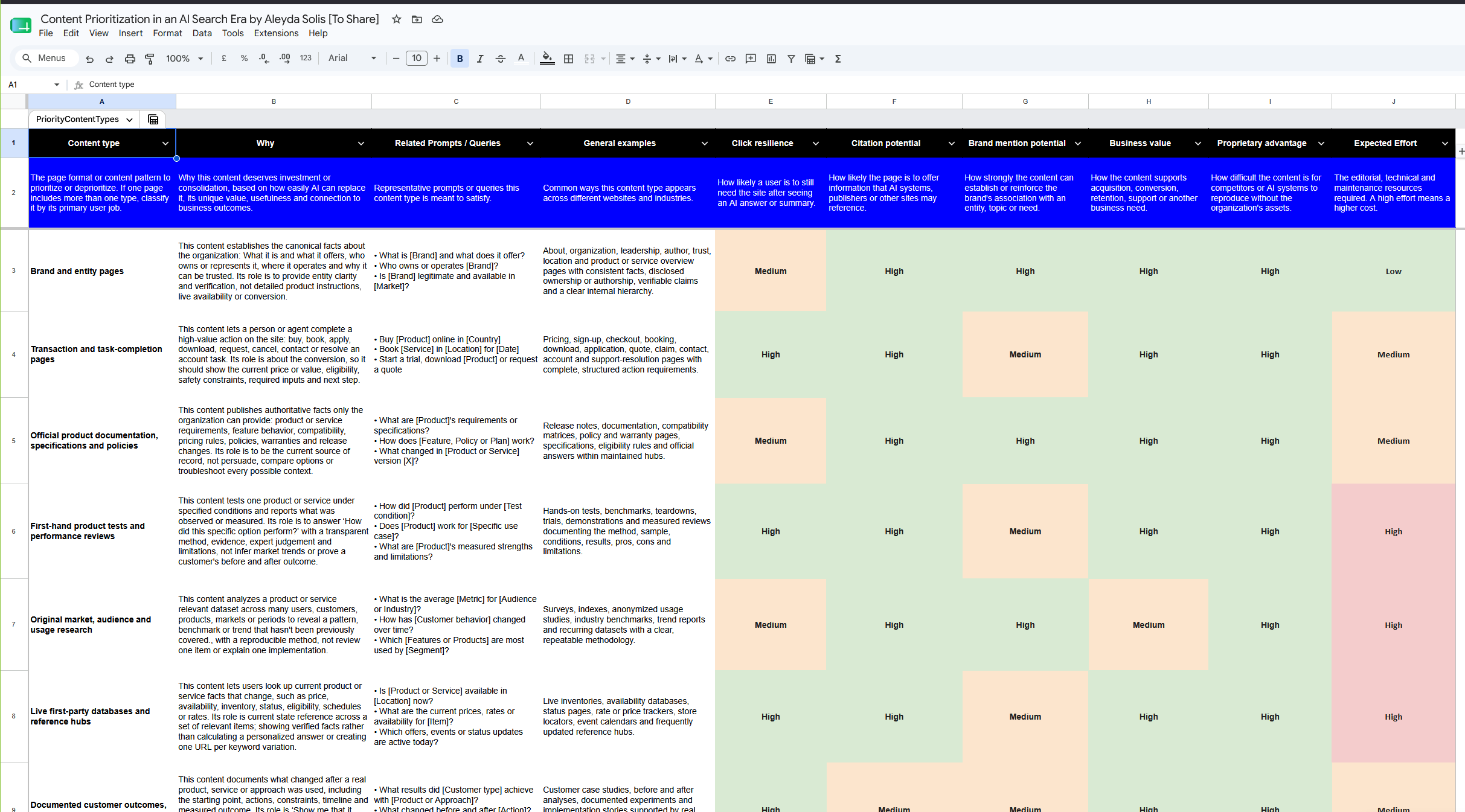
Well it’s free, it’s useful and from a very reputable source (Aleyda), what are you waiting for! A sort of “excel checklist” on content prioritization. Use it in your own organisation to prioritize content at your own platform.
Recommended Content to Prioritize
Brand and Entity Pages
Transaction and Task-Completion Pages
Official Product Documentation, Specifications, and Policies
First-Hand Product Tests and Performance Reviews
Original Market, Audience, and Usage Research
Live First-Party Databases and Reference Hubs
Documented Customer Outcomes, Experiments, and Case Studies
Product-Specific Implementation and Troubleshooting Guides
Evidence-Led Comparisons and Selection Guides
Personalized Tools Using Live or Proprietary Data
Curated Community and Practitioner Knowledge
Original Reporting and Source Analysis
Scalable Pages Featuring Genuine, Useful Insights Powered by Unique First-Party Data
Recommended Content to Deprioritize
Standalone Commodity Definitions Without Brand or Journey Context
Rehashed Explainers and How-To Guides Without Original Value
Fragmented FAQ and Keyword Variant Pages Serving One Intent
Third-Party News and Press Release Rewrites Without Original Input
High-Volume Tangential Topics Without a Credible Business Journey
Biased or Mass-Produced “Best”, Comparison, and Alternatives Pages
Generic Calculators, Quizzes, and Generators Without Distinctive Inputs
Programmatic Pages Built From Public or Competitor Data
Direct link to the worksheet: https://docs.google.com/spreadsheets/d/18myHCvxeylIyc6zGnE5HWLYw8nN7rQz-TfMQslAfiko/edit?usp=sharing
Or the “in depth guide”
https://www.aleydasolis.com/en/ai-search/content-prioritization-ai-search/
🔛 Live shopping continous to get more global

Live shopping! It can really be fun and I did this in Asia already years ago. Now it moves more and more to the West, Western platforms are now rapidly accelerating their investment.
I can recommend the app “Whatnot” to see some fun examples.
Techcrunch is reporting E-bay is trying to catchup and will have a big focus on live shopping. This might end up in much more marketplaces in the West I think.
Buyers are also spending more. First-time shoppers in the collectibles category are dropping around 70% more than their non-Live shopping counterparts.
More on live shopping? I wrote earlier about the test Dutch airline “Corendon” did:

Ebay details:
https://techcrunch.com/2026/08/06/ebay-continues-to-bet-on-live-shopping-after-record-quarter/
🇹🇭 Time for a laugh: Thai advertisement for a dietary supplement
Thailand never disappoints when it comes to wild, over-the-top humor in ads. You keep on watching.
Thai ads must pull one of the best view-through rates on YouTube. No hard data to prove it, just a feeling from someone who's watched too many of these.
VTR matters: in a skippable-ad world, the real test isn't whether people see your ad, it's whether they choose to keep watching.
This ad for a dietary supplement turns a simple product pitch into a full-blown comedy show with drama, chaos, and plot twists no one asked for!
🔁Lenny’s pod: First principles thinking (clip)
I like product management and I try to follow it closely, also because I would like to use it in my daily work, f.e. helping to improve our digital solutions. Lenny’s pod is a great source (one of the best) on product management. I highlight here a small part on “first principles” in a pod with the technical PM from Anthropic. Yeah it’s a bit technical this clip, but basically what she means is:
In traditional product management, PMs often rely on standard playbooks (e.g., writing a 10-page Product Requirement Document (PRD), following a rigid 6-month roadmap, or copying existing SaaS design patterns). First principles thinking requires stepping back to ask: “With this brand-new technology, what is the best possible way to deliver real value to the user right now?”
First Principles Thinking means breaking down a problem to its absolute core truths and asking, “What are we actually trying to achieve here?” rather than just copying existing habits, standard frameworks, or past templates.
An eval (evaluation set) is a standardized benchmark of real-world test cases used to measure an AI model's accuracy, safety, and performance. Instead of manually testing prompts, an eval runs the model through dozens or hundreds of specific scenarios to automatically measure its success rate. I wrote about evals earlier here.
I like the examples in the video. I share it here as I think it’s important to remember first principle thinking, in daily job to have some reference, and also its an important skill set for future jobs.
Traditional PMs optimize screen layouts and click flows the pixels. In AI products, the UI is often just a chat box; the true experience lies in the underlying context and text chunks processed by the model the tokens.
In practice: Product managers read actual conversation transcripts to pinpoint exactly why an output failed (e.g., hallucination, wrong context, or poor prompt design).
Why it matters: Fixing a bad AI response requires troubleshooting token trajectories and model instructions, not tweaking the front-end layout.
While standard roadmaps plan features linearly over 6–12 months, AI capabilities advance on an exponential curve. Features that are difficult or expensive today become trivial with the next model generation.
In practice: Teams ask: “When the next model generation arrives, how will user behavior shift, and what does that mean for what we build today?”
Why it matters: Building simple, flexible architecture around core user workflows prevents creating fragile, over-engineered hacks that become instant technical debt when a smarter model launches.
Thinking a bit about it, this also relates to advertising, right? When applied to advertising and e-commerce, First Principles thinking forces a shift away from old habits (e.g., rigid campaign playbooks, fixed banner design rules, basic keyword targeting) to focus on how AI changes real-time customer behavior and campaign optimization.
If you use LLMs to automatically write product bullet points (that I sometimes do) or search ad copy for thousands of SKUs, you don’t manually check each output. You build an LLM-judge or code-based eval that grades every piece of generated copy against specific criteria before it goes live:
Tone & Voice Alignment: Did it use preferred, approachable language (e.g., informal “je” vs. formal “u”)?
Commercial Compliance: Did it omit forbidden buzzwords (like unwanted compliance jargon) and keep the focus strictly on customer value?
Schema & Constraint Accuracy: Is the character count under headline limits, and is the CTA correct?
Thanks for reading Crossborder Alex : Global Marketing & E-commerce! Subscribe for free to receive new posts and support my work.
Interested in more? Checkout my archive!
Or use my vibe coded search engine to find content tailored to you, I improved the search engine a bit. Let me know what you think.