

🇩🇪 Zalando’s AI path | higher 2026 profit | Visit to Zalando Outlet in Berlin


Currently I am traveling and I am in Berlin. The city of “Zalando”. I just visited their HQ (but it was closed) and I went to their physical outlet store.
But before I write about that, their figures and some glimpse of their strategy came out a few days ago.
Zalando is doing really well with AI, and I think it’s worth to regularly test and use their app. They are trailblazers in Europe take note of these citations:
Zalando said AI-generated product images were saving money and time on ad creation and enabling it to publish 70% more content, while an AI virtual try-on was also helping shoppers pick their correct size, reducing size-related returns.
Today, more than 80% of traffic to Zalando is organic and does not come from paid advertising, according to Schröder, while the rest comes largely through paid channels such as Google and Meta. But “a low single-digit percentage” is now driven by AI. He is optimistic that the technology will help reach new customers.
Zalando is also unlocking a new, conversational way to shop by evolving its Zalando Assistant into a true personal lifestyle companion.
It seems to me Zalando is both open to agentic commerce and tries to make their own AI layer extensive and unique so they can lockin users. 62 million customers with data of size, style, and behaviorial data, that no generic LLM has. The question is, I think, whether they use that to make their own app unbeatable, or sell access to it and become the AI backbone for fashion e-commerce at large. Or maybe a combination🧐.
I have visited their outlet store today here in Berlin. It fits the brand only partly, I think. It’s very nice to visit a branded physical store and it’s very recognizable “Zalando”. But what I would have expected from such an innovative online brand, that focuses so much on AI and personalisation, is a much more phygical integration. There was hardly any. I even had to signup “again” in store, to some other portal to get an extra discount, really strange to me, as I am already a long time member of Zalando and Zalando Lounge and I have both apps on my phone.
https://corporate.zalando.com/en/investor-relations/zalando-full-year-2025-results
https://finance.yahoo.com/news/zalando-notches-23-growth-q4-082518413.html?guccounter=1
🔍Lily Ray: Your SEO and GEO Strategies should always work together
I think this is a very, very well written article by Lily Ray and much worth a read. It’s (sorry) again the SEO/LLM/GEO topic, I wrote about before many times, but I do think it’s very important to understand how things work and things update fast.
Basically what Lily says is that if you ignore traditional SEO (the foundation), the AI will never "see" your content, and therefore will never cite or recommend you in its answers.
These bullets below are “no go’s” mentioned in the article. So never do those things. (yeah and all “no go’s” are backed by data), thanks Lily!
Scaling content rapidly with AI
Artificial refreshing
Excessive Self-Promotional Listicles
“Summarize with AI” Buttons that Promote Your Brand
Excessive “Alternatives” and “Comparison” Pages
Checkout the details in Lily’s substack:

To complete this I add some snippets of a post (also shared by Lily) from Malte Landwehr called: Not getting cited by LLMs? You can debug that!. I think it can be used as a framework for your clients or the company you work for.
Is your website directly cited in the answer?
Yes? Perfect. Your work is done and you should probably focus on other prompts where you are not cited, yet. No? Go to step 2.
Is your domain used as a source but not explicitly cited?
Yes? Make it more citeable / quotable. Add a summary with the relevant key statement. Keep it short. Write in clear and simple language. Keep the entity density high. If relevant, explicitly express relationships between entities. If you use technical terms or abbreviations, shortly explain them. Use an authoritative, declarative voice. The summary does not have to be for the whole article. You can also summarize a long paragraph, a table, or a chart/diagram. It a summary does not fit, you can use question-answer style content blocks. No? Go to step 3.
Does your domain rank for the fan-out query but not get used as a source?
Yes? Improve the content so it is more source-worthy. Make sure you agree with the broad consensus. Add unique information no other source has. Strengthen your EEAT signals. Add quotes from trustworthy sources. Explicitly name your sources. Ideally, expand your document to cover multiple fanout queries. No? Go to step 4.
Do you already have a relevant page for the fan-out query that does not rank yet? Yes? Make sure it is indexed. Build internal and external links. Improve the content. Make sure there are no crawling or rendering issues. In short, do SEO. No? Create that page.
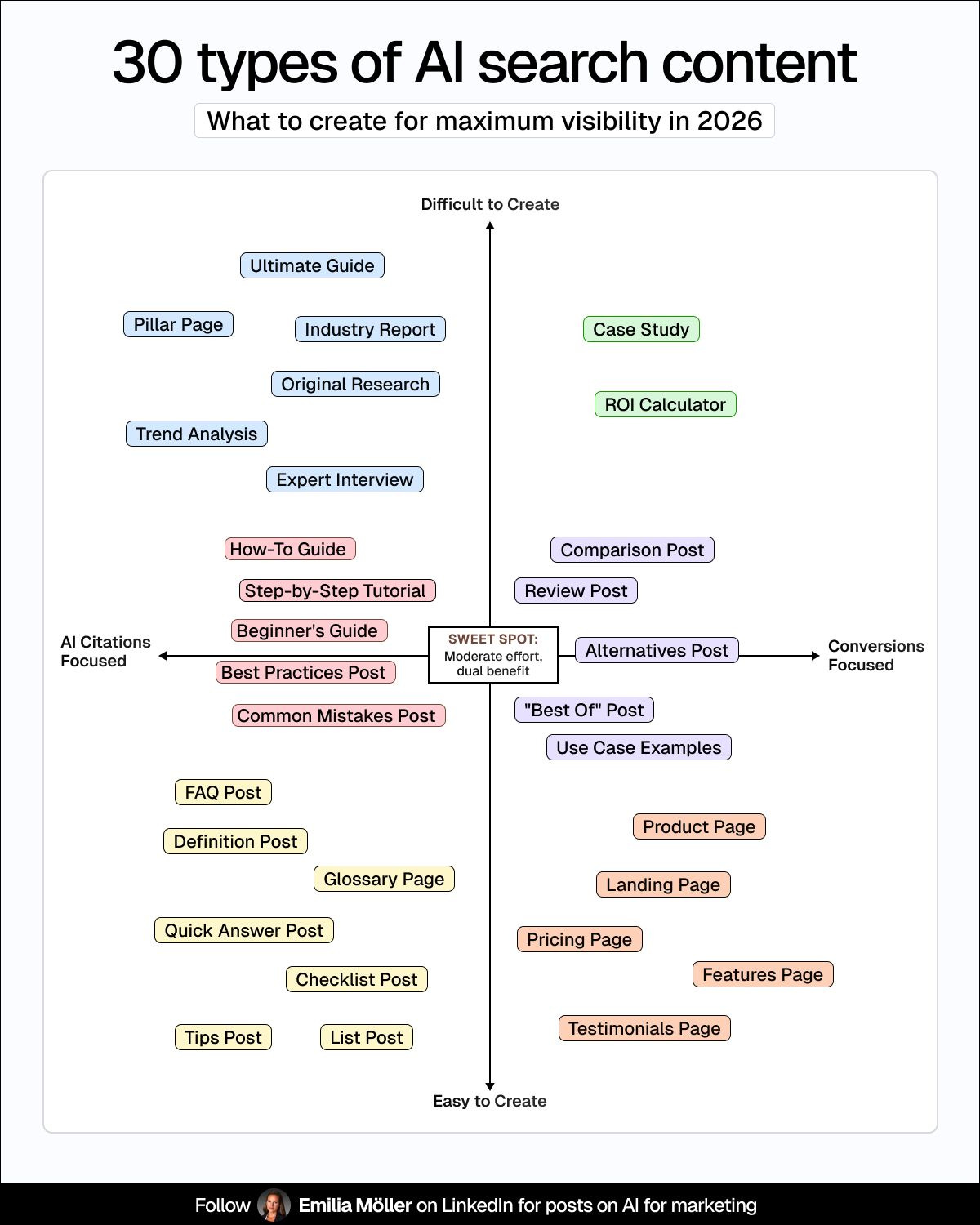
Last but not least on this topic a quadrant on types of content, LLM’s like to accumulate. This comes via Emilia Moller. Very useful for every content strategy.
📘Deloitte on loyalty drivers: Digital experience is the #1 loyalty program priority across all generations
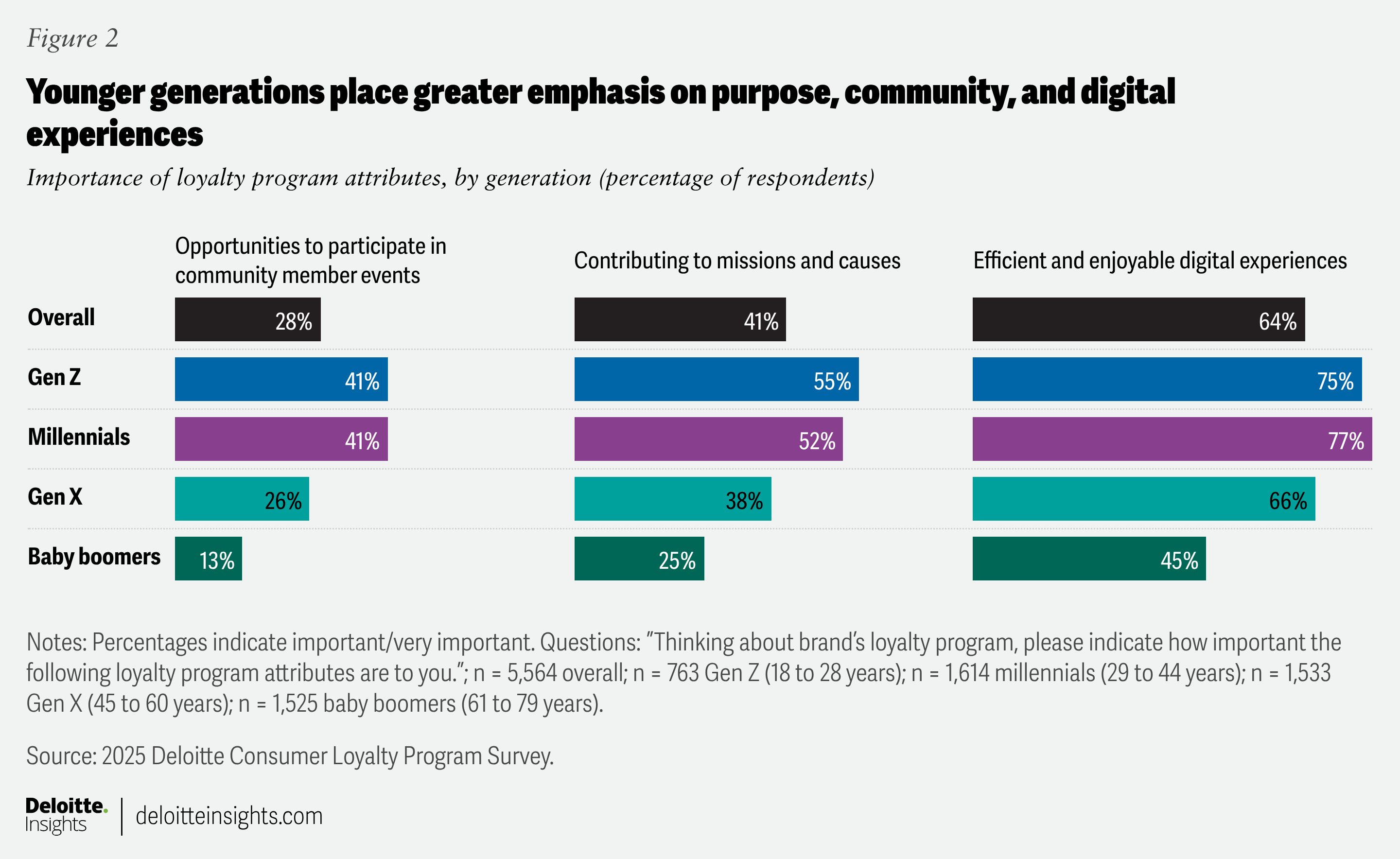
Yeah, let that sink in😅! It’s not a point system itself, it’s a product that works and innovates. The gap between what brands think drives retention and what actually does remains a major blind spot in many loyalty strategy’s.
I think its very much true. Sure loyalty programmes help, but the core functionality should be the loyalty driver itself. Just like it is with the Revolut app and up to a certain way with the Amazon app.
65% of marketers believe customers return because of “brand love” but fewer than 1 in 4 consumers cite emotional attachment as a drive.
Consumer behavior underscores the shift, as 64% prefer apps over email for loyalty interactions and over 50% engage weekly, making digital seamlessness a baseline expectation rather than a differentiator.
Consumer companies’ goals might need to shift from simply maintaining a program to designing programs that convert enrollment into enduring engagement. Three strategies can help define the path forward.
Now how will this loyalty work if we really get phones that let you vibe code your own apps or widgets? (yeah I wrote about this earlier). AI builds a widget/mini-app for your home screen, no code.)
I think loyalty via the ‘core app’ doesn’t vanish, at least not in most cases.
It transforms.
Turn a product into an open, service layer: clean APIs that let agents + vibe-coded minis pull real-time personalized rewards, dynamic offers, direct value.
Not every app needs this tomorrow, But as a Product Owner of an app, I think you better have an API-(first) strategy now. Otherwise, when agents or vibe-coded shortcuts handle discovery/rewards/offers, your brand or app becomes invisible. No icon, no opens, no loyalty just skipped.
So I think a very interesting and useful article if you are busy with loyalty. It includes a step by step approach and also highlights the importance or actually critical successfactors of AI personalisation.
Or https://www.emarketer.com/content/every-generation-wants-same-thing-loyalty-programs
🇳🇱 CorenDon NL does live stream test and it worked!
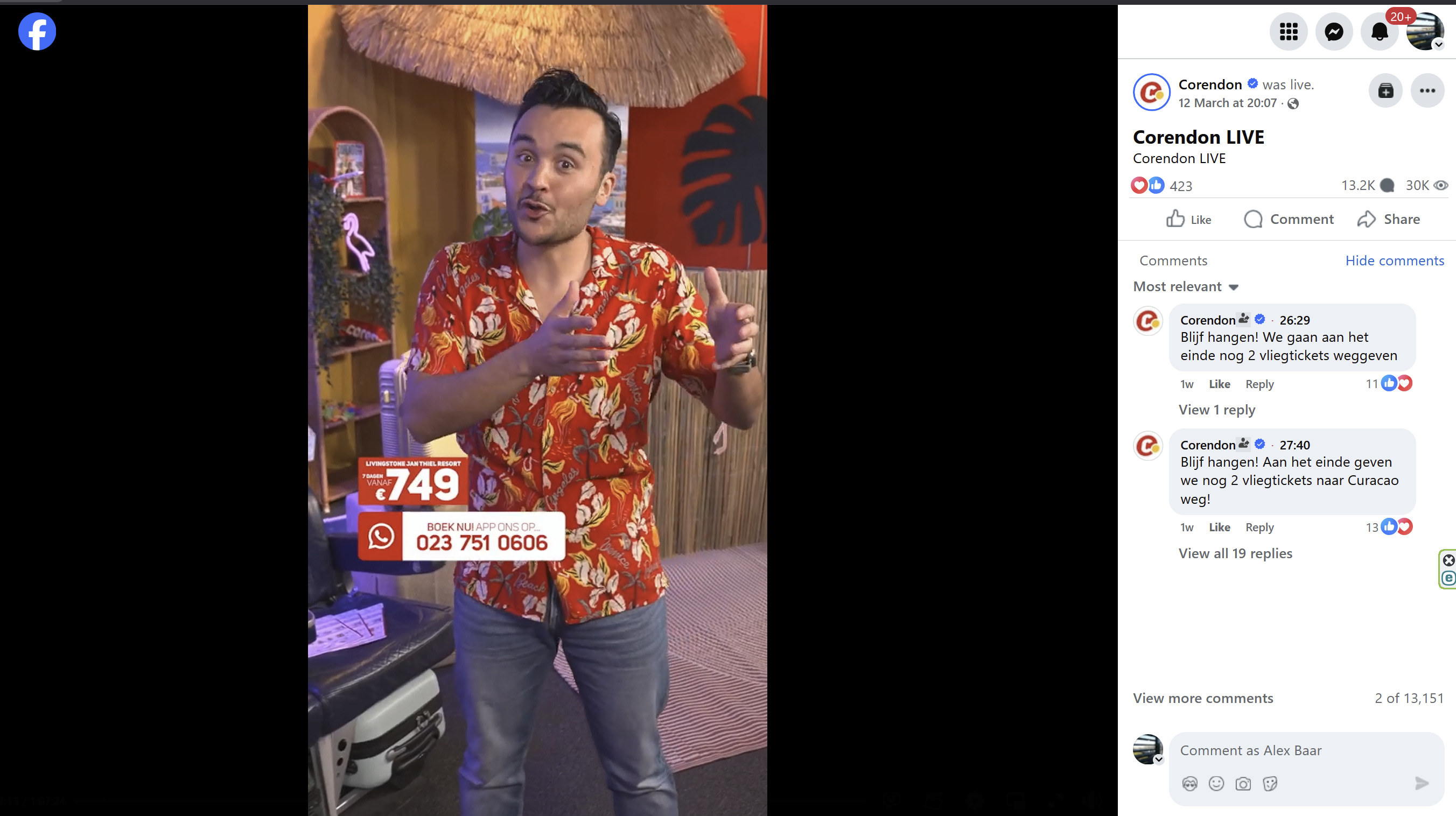
As you know I have seen “live shopping” a lot in Asia. Participated myself as well, but it never took really off in Europe. I always wanted to test and try this concept in Europe, but none of the company’s I worked for supported the idea. That’s why this story from CorenDon (a Dutch airline) is so nice, they did try it and it was also a success. Imagine the possibilities in the future when platforms get much more integrated live stream options (like China).
Now the articles I link to below, are in Dutch, I translated the most important parts, if you want more info just use a translation extension.
Corendon ran an interactive livestream (nearly an hour long) on social media platforms like Instagram, Facebook, and TikTok, featuring a presenter showcasing Curaçao as a destination with visuals and engagement elements.
It featured a specialist host flown in from the island, multiple cameras, live direction, green-screen beach/airplane scenes, interactive Q&A, a game segment, and high engagement.
Key highlights and stats:
Peak concurrent viewers: over 1,500 (Instagram/Facebook) and up to 15,000 on TikTok after algorithmic boost.
Massive reactions: ~13,000 chat messages on Facebook in 45 minutes; nearly 16,000 reactions and 105,000 likes on TikTok in an hour.
Audience: 77% female; strong appeal to Gen Z (despite Corendon’s usual older demographic), who asked island questions and wanted fast, direct bookings.
Real-time conversions: 70–80 WhatsApp conversations handled simultaneously during the stream by call center staff in the studio, leading to immediate trip bookings to Curaçao via WhatsApp.
Quote from awesome agency (production partner): “We saw it happen. People book trips via WhatsApp from a live stream. People want this.”
Travel director Martin de Boer: “With this format, we noticeably served GenZ’s wishes. They want live, direct, fast, and transactional—even for travel and vacation.”
The experiment was inspired by Chinese live commerce examples and timed well amid global travel shifts (e.g., away from Middle East/Asia due to unrest, boosting Curaçao interest). Corendon sees huge potential: plans to run similar streams regularly (possibly every other week), extend to their youth brand Go Fun, and eventually enable full bookings without leaving the app (e.g., directly in TikTok or WhatsApp). They view it as a game-changer for shopping, inverting the traditional sales funnel with real-time, low-friction transactions.
I have been watching part of the recording and I think it’s really well done things that stand out for me:
Frictionless choice: By offering only 2 exclusive deals, they avoided "choice problem.”
Conversational commerce: Keeping the WhatsApp number visible throughout the stream.
Layered incentives: They captured two types of buyers by offering exclusive show deals for impulse shoppers and general promo codes for those looking at other holidays.
Gamification & Retention: The "Gouden Koffer" (Golden Suitcase), so users need to guess the suitcase code and its a surprise what is in there. End-of-show giveaways to let people keep on watching (and interacting_).
I exported part of the comments on Facebook of this stream and ran it through Gemini for a sentiment analysis, based on that, I think this live stream, was very good for the CorenDon brand as well, Gemini told me:
The sentiment of the livestream comments is overwhelmingly positive.
Positive: 55 comments (55.6%)
Neutral: 39 comments (39.4%)
Negative: 5 comments (5.1%)
Technical/Clarification Comments: The few negative or neutral comments were mostly related to technical aspects (e.g., "Geluid is slecht" - Sound is bad) or seeking clarification on the terms of the deals.
High Emoji Usage: The chat was filled with positive emojis such as ☀️ (sun), ✈️ (airplane), 🍀 (four-leaf clover), and ❤️ (heart), indicating a vacation-ready mood.
Excitement for the Promotion: Most users expressed high excitement for the Corendon deals, particularly those involving Curaçao. Common words used include "Leuke actie" (Nice action), "Geweldig" (Great), and "Droom" (Dream).
Cool CorenDon, very very nice! Thanks
Stream: https://www.facebook.com/Corendon.nl/videos/1427760859078572
🇲🇾 Emerging spots paying more than Japan (and closing on the West)
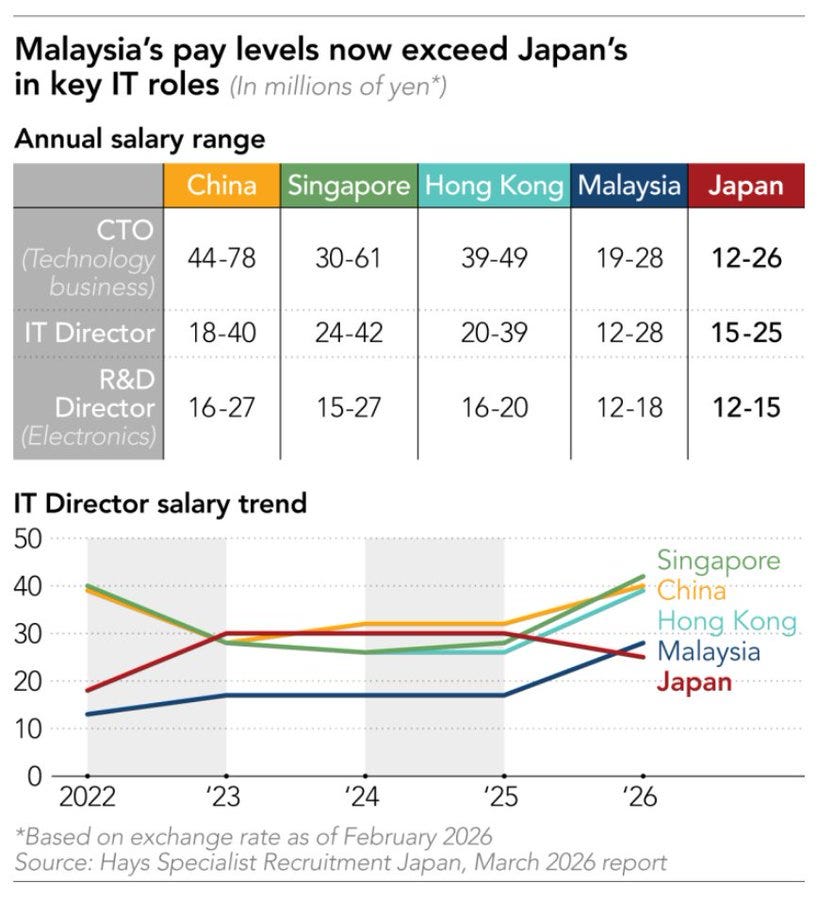
Old story: US tops tech pay, Western Europe and Japan sit behind that, rest catch up slowly. But this is now really changing.
In Malaysia, senior tech roles now pay more than in Japan. Not everywhere, but slowly it’s happening. Same vibe in Poland: IT pay climbing fast. After tax and living costs, seniors sometimes net better savings than in parts of Western Europe (even Germany in some benchmarks). And bigger picture, Poland just overtook Switzerland in GDP rankings (top 20 now, per IMF). “The Poles are coming!” as I wrote in edition 129 entrepreneurial energy, e-commerce acquisitions, serious competition.
Details: https://asia.nikkei.com/business/technology/japan-s-key-tech-workers-are-now-cheaper-than-malaysia-s
And
https://wbj.pl/poland-overtakes-switzerland-in-global-gdp-rankings/post/146998
My previous post on Poland:

That’s it for today. Thank you for reading. Greetings from Berlin. Schönen Tag!
Slowly I am considering new opportunities (also international):
Contact me via LinkedIN → https://www.linkedin.com/m/in/alexbaar/
Checkout my archive of previous newsletters if you want to read more :