

🇨🇳 JD Malls does things (a little) different
I think I will travel to China again in March or April again, and for sure I will then visit JD Mall’s as I just learned about them via Tech Buzz China’s newsletter👍
I remember JD from when I lived in Shanghai, to me then mostly an online platform, that had a much better service level then Taobao back then, so I used it for more expensive purchases.
This newsletter is very interesting to read as JD does things a little different in their shopping malls. As Ed from TechBuzz China, points out:
Purpose-Built Environments: All display models, from washing machines to ovens, are fully connected to power, water, and drainage. This infrastructure is central to providing an authentic user experience.
Driving High-Consideration Purchases: This hands-on approach builds customer confidence and reduces purchase friction, especially for high-value items. By experiencing a product’s performance firsthand, customers can identify the item that genuinely meets their needs, which in turn is expected to increase customer satisfaction and reduce return rates.
Renovation Cycle: Every JD Mall undergoes a major renovation every three years to refresh its look and offerings, ensuring the concept does not become dated.
Free Value-Added Services: To attract local residents, the store offers complimentary services, most notably a professional-grade laundry and shoe-washing facility. Residents can book these services and visit the store, creating regular foot traffic.
Looking forward to visit JD malls and China this spring.
Checkout the post:


🇬🇧 KingFisher: Store of the future, guess what?: lot’s of AI powered retail

King Fisher (from what I read a DYI store from the UK) released their “Store of the Future” blueprint as a microsite. I like the app in the center of the shopping experience.
Store assistants stay at the heart of the experience, but now with AI headsets that surface stock, spec and project history in seconds.
Home improvers (that is the audience, King Fisher aims at) will be guided through every step of their project with the support of an AI assistant readily available on an app.
Online is the core. This means customers can pick up a tap they reserved online and book a plumber through a mobile app at the same time, a one-stop, frictionless solution in a single visit.
Augmented Reality powered design studios, one-hour tool hire, and live workshops that will make every visit more engaging and productive.
With support from AI, ‘hire kits’ that can be ordered online and returned once used will enable customers to fix a leaking tap or install a shelf themselves – allowing everyone to DIY.
https://www.kingfisherstoreofthefuture.com/
🛬 Etihad WiFi Purchasing experience🧐
Just wanted to drop this here, as an example that there are always opportunities for improvement. The other week when I traveled from Bangkok to Amsterdam with Etihad, I purchased “on flight WiFi”. After purchasing you get an e-mail, it looks like this (warning!! Very, Very, Ugly non branded, seems like a standard supplier email (Panasonic)
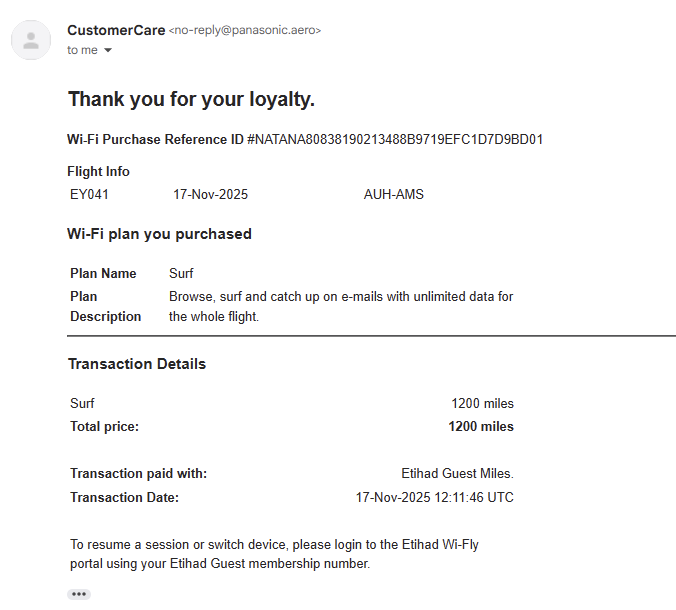
On a flight you are often “bored”, so this is a perfect “touchpoint” to boost future sales, brand connections etc. Just a few remarks or ideas:
It wasn’t possible to this from their app, which would have been a much better experience.
There is a very standard subjectline, why not : You’re now online on EY041 ✈ Wi-Fly Surf is ready” Enjoy!
I am sure people will have difficulties/questions in setting up WiFly, there is no follow up or guidance, what to do when you have a question. Probably many things can even be solved by a local AI tool (from the app I would say) but at least it should have something like: “Having trouble? Here’s how to get help from your seat.”
Now I understand how fancier transctional emails are, the more difficult the deliverability, but at least there could be some kind of brand connection.
A (deep) link to loyalty points overview in the app is also lagging as I just spend loyalty points, and I think most people would like to check that.
Set some promotions for future flights: at least the possibility to set reminders for future flight offers to specific destinations or for a specific price range.
🆙Performance marketing: Google Ads Update including overview
Just listened to this podcast on the plane (after purchasing this ugly emailWiFly😅), definitely worth saving and listening. Whether you run an agency or you’re a digital marketer, it’s packed with insights. It breaks down a leaked Google email and shows where Google Ads is headed. I summarized the key points below too, if you don’t feel like watching/listening, just scroll to the screenshots.
Google is moving from pushing (PMAX) to the “Power Pack,” though Google also encourages hybrid approaches, such as running standard shopping campaigns and PMAX in parallel.
The current strategy, is the “Power Pack,” defined as the “holy trinity” of campaign types: Performance Max, Demand Gen, and AI Max for Search
The role of PMAX is to find conversions across all Google networks. PMAX is clearly defined as bottom-funnel only, operating strictly in the purchasing phase, dispelling the earlier market assumption that it was full-funnel. PMAX performance is now discussed in terms of Marginal Return on Ad Spend (MROAS), meaning the system is always going to find the next cheapest conversion it can.
Demand Gen is positioned as the mid-funnel campaign type and successor to Discovery Campaigns, focused on discovery and consideration. It heavily incorporates YouTube and video action campaigns, estimated to be about two-thirds YouTube and a quarter Discover, and allows for useful channel targeting
AI Max for Search is designed to be expansionary, finding incremental conversions or missing traffic on top of established search campaigns. “AI is not strategic,” it may aggressively bid on competitor terms or scale into low-intent areas like the Search Partner network, necessitating careful guardrails. It’s not yet mature at all.
A major issue is the redundancy of technological features within the Power Pack such as Dynamic search technologgy.
Due to the vast overlap in inventory and features, there is a high risk of cannibalization and self-competition. Therefore, it is essential not to switch on all components simultaneously, and the recommended setup is to ensure Demand Gen remains purposely mid-funnel, acting as a feeder to PMAX rather than duplicating conversion goals.


🧐From traditional product management to AI Product Management
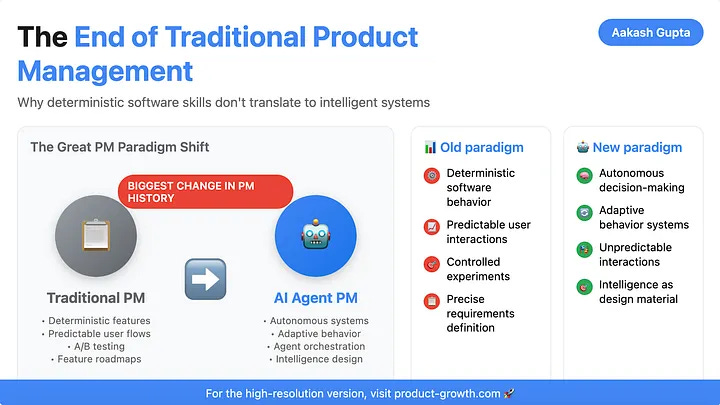
I am trying to find a course that is not too expensive, on this topic It’s very interesting if you like product management as I do.
It’s basically a move from “feature thinking” to start thinking in autonomous, goal-driven agents embedded in products. I think if you start thinking and developing this way now you can have massive competitive advantages.
So just an example how this is a mindshift: not think feature wise: like for example when you develop an app: “we need a voucher center in the app (or web)”.
But more like building a “savings agent” whose single goal is: “Make sure this user never misses a deal that is relevant for their business.” That can then be setup f.e. based on order history and across various UX positions in the app think about:
Personalised home screen where always all savings are shown and the agent says: Hey, I found €187 of savings for you this week if we swap a few products you usually buy for the promoted ones (same quality). Want me to show the optimized basket?”
If the users buying patterns are known (e.g., every Tuesday 20 kg chicken wing) then you can send a push notification or email Tomorrow the chicken wings you order every week are 22 % off if ordered before 23:59. Shall I add the usual 20 kg to your basket now?” [Yes / Change quantity / Not this week]
So this is really different from the past way of working setting up a “voucher center”. As a result, this also translates in very different metrics, like for example : Context Recall Accuracy. Very nice this way of thinking about products. If we all do this, customer experience will improve drastically!
Details here:
🤖Perplexity and Paypal Team Up
Perplexity and Paypal team up to launch an AI-Powered Shopping Tool. I share it as I keep a close eye on how user journeys or purchasing journeys might change.
Shop from 5,000+ Stores: Instantly buy products from over 5,000 PayPal merchantsright inside the chat.
Smarter Shopping: The AI suggests, compares, and helps check out products instantly, no website hopping.
Exclusive Perks: PayPal and Venmo users can get a free 12-month Perplexity Pro subscription, early access to new browser features, and more.
Unlike the earlier version, where Perplexity handled the transactions, PayPal merchants will now take over those responsibilities, including purchases, customer service, and returns.
https://www.tipranks.com/news/perplexity-partners-with-paypal-to-launch-ai-powered-shopping-tool
🇹🇭 How localisation and AI are shaping Thailand’s ecommerce boom
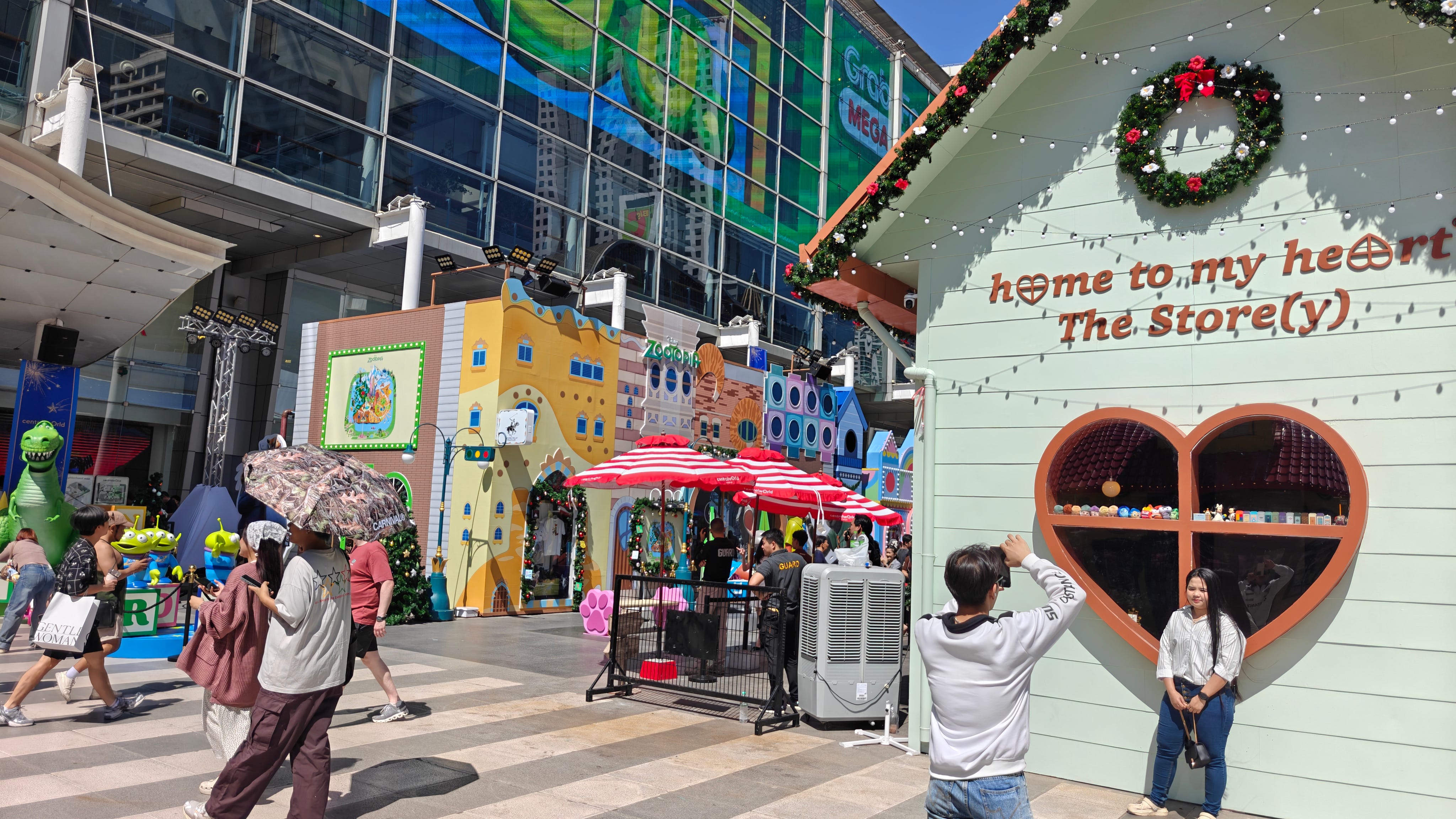
I just got back from Thailand and of course I paid a lot of attention to what is happening there in retail and e-commerce. This article fits perfectly in what I saw in malls but also my experience while using (local) apps like Lazada/Line and Grab.
“Thai malls have always been more than shops because they’re destinations, social theatres and cool escapism,” says Andrea Ng, insights director at Canvas8. “Ecommerce mimics that communal energy in digital form. Live streams are the new atriums. The difference is you no longer need to travel across Bangkok traffic to be part of the scene. To buy during a live stream is to belong because it is as much a performance as it is a transaction. That cultural translation gave ecommerce a social legitimacy that pushed it mainstream.”
Thailand also leads in live-stream commerce, adapting it to Thai sensibilities. In 2024, Tripcom Group opened its first live-streaming centre in Bangkok. “Live-stream and short-video commerce have become mainstream, supported by consistent daily video content posts and multi-hour live streams that drive engagement and sales,”
AI is creating truly personalised experiences, recommending products based on browsing habits, sending tailored promotions, and anticipating what they want before they even know it.”
Local adaptation remains crucial. Much innovation focuses on hyperlocalising platforms to fit naturally within Thai lifestyles. Line Gift is a good example, integrating social behaviours with ecommerce. Installed on at least 4,745 ecommerce stores in Thailand, Line enables “users to send products and vouchers from leading retailers and F&B brands directly in Line, transforming everyday conversation into a purchase moment,” says Ng. “This embedded commerce shows Thailand is not about reinventing the wheel, but making ecommerce indistinguishable from the ways people already connect.”
So I think this is really nice! Basically for example with the Line messaging app: suppose you are chatting with a friend and it’s their birthday. Instead of typing “Happy birthday!”, you tap the gift icon, browse real products/vouchers from Starbucks, Swensen’s, Siam Paragon, Lazada, Pomelo, etc., pay instantly, and send the actual redeemable gift directly in the chat. The friend gets a beautiful animated sticker + voucher in the conversation. They tap it and redeem instantly: no leaving the app and then onwards to ordering or to the mall to redeem the voucher!
Details:
🫡Open to new opportunities
Thanks for reading, liking and subscribing, it means a lot to me! Hope you liked it. Slowly I am considering new opportunities (also international):
Contact me via LinkedIN → https://www.linkedin.com/m/in/alexbaar/
Checkout my archive of previous newsletters if you want to read more :