

Goodmorning! another weekend, time for your weekly newsletter on global marketing & retail. I hope to travel in spring at least a few days to Taiwan to see if I can find some nice retail story’s there, so stay tuned. Now let’s get on with the newsletter:
📖ChannelEngine Marketplace shopping behavior report 2026


Channelengine is a great company, I have been there a few times and I also know some people there. Very knowledgable people especially in international e-commerce via marketplaces.
They just released there shoppingbehavior report and it’s just a short quick form entry away so check it out!
I think it aligns perfectly well with other trends in ecommerce like changing shopping journeys, particularly that are in the recent SEO trend reports: fragmented, trust-driven, and multi-channel paths to purchase.
Details and full report: https://www.channelengine.com/marketplace-shopping-behavior
More on changing journeys and trends in SEO in my previous newsletter:

🌍E-commerce in 2026: faces a structural reckoning in 2026

Well, its 2026, I guess time for many organisations to publish reports or overviews, so let’s do another one now we are at it.
I always try to see if I can find patterns between reports or outlooks, because then I think it’s more valuable.
Just like the marketplace report above, this overview, also aligns a bit with other things I read or experienced. What I found especially interesting in this article is:
Marketplace algorithms are now factoring operational performance — reliability of delivery promises, regional carrier capability, refund patterns and backorder frequency — directly into search ranking. (That’s interesting, Amazon had this for a while but now it seems to get mainstream for other marketplaces as well)
“The era where fulfillment was an expense center is over,” Steinz said. “In 2026, fulfillment becomes a demand accelerator or a demand suppressor. Nothing in between.”
“The mistake in 2025 was forcing every buyer through the same experience,” Owide said. “In 2026, separating these journeys — and measuring them separately — will be essential. If you put friction in front of a long-tail buyer, they won’t ask for a quote. They’ll find someone else in two clicks.”
This latter one is also very interesting, it’s a move to, maybe I can call it like “Coolblue does”: product journeys for some products or category’s at a marketplace and for others products or category’s to make sure the focus is at the most rapid purchase ever.
More on product Coolblue’s journey’s here
Take special attention in the article to the term “long tail buyer”, it basically comes from Chris Anderson’s 2004/2006 concept, I found out.
Instead of focusing only on a few blockbuster (”head”) products/customers that drive most revenue, the internet allows profitable sales from a huge number of niche, low-volume items/customers (the “long tail” of the demand curve).
So one can define:
A long-tail one-off consumer/business (wants instant prices + easy buy)
Or a contract buyer (wants account pricing, bulk options, approval workflows, tailor made product journey’s)
Forcing the second experience on the first type kills conversions, the warning: “If you put friction in front of a long-tail buyer, they won’t ask for a quote. They’ll find someone else in two clicks.”
That’s why I think in many cases a combination, depending on f.e. category is the way forward.
Details:
https://www.digitalcommerce360.com/2025/12/30/ecommerce-faces-a-structural-reckoning-in-2026/
🌍Africa’s growth could outpace Asia in 2026
Often most international e-commerce or economic news is focused at Asia, but Africa is really booming economically and that means there are also many opportunities in digital commerce. I share here this FT article on the situation in Africa. It’s paywalled but as you know there are ways around that (hint: www.archive.is).
One citation:
Africa will grow faster than Asia. If the 54 African economies manage to outpace their Asian counterparts, it would be the first time in modern history that this has happened.
Details in the FT: https://www.ft.com/content/204482a2-677c-42a0-bcec-a4cdac00eb92
I wrote earlier in my substack on Africa’s e-commerce potential, for example here:
https://www.crossborderalex.com/p/global-digital-marketing-and-retail-ed55
✈️ +++Passenger Experience +++
Just watch and hope your airport provides these kind of services!
🇬🇧 Dishoom’s $400m Restaurant Playbook
Sometimes story’s on how businesses started or how they grow are very nice to read or listen to, for example this one with Howard Schultz on Starbucks.
This fellow substacker, Trung Phan has a great story on a UK-based Indian restaurant chain that’s now valued at around (~$400m). What makes it stand out?
The founders cleverly “gamified” the dining experience with a fun dice roll promotion inspired by Bombay’s old underground lottery (Matka), giving groups a 1-in-6 chance to score a free meal if they roll a 6. It keeps customers come back.
Reading this story for sure get’s you in “Creative Mode”.
<Creative mode ON>:

🇦🇺 Meat & Livestock Australia’s new lamb campaign focuses on national happiness
I’ve been following Meat & Livestock Australia for three or four years now. Every Australian summer they release their annual Summer Lamb commercial, yes actually annual, and people genuinely look forward to it.
The 2026 edition plays on Australia dropping out of the Top 10 of the World Happiness Index, flipping the idea by saying real happiness isn’t a ranking, it’s shared moments, often around one of Australia’s top activities, BBQ.
The familiar face delivering the message is Sam Kekovich, a former footballer and long-time “Lambassador” who has become inseparable from the campaign. His presence alone signals: this is the lamb ad.
I like that the ad, sells lamb, but it also subtly promotes Australia itself, making it feel bigger than just another product ad.
Making a campaign truly annual creates anticipation and cultural relevance, not fatigue.
Consistency (same timing, same character, new insight) builds brand memory far better than constant reinvention.
Watch the video, it’s fun to watch!
🇺🇸 Amazon aims to make AI-assisted discovery a standard part of shopping
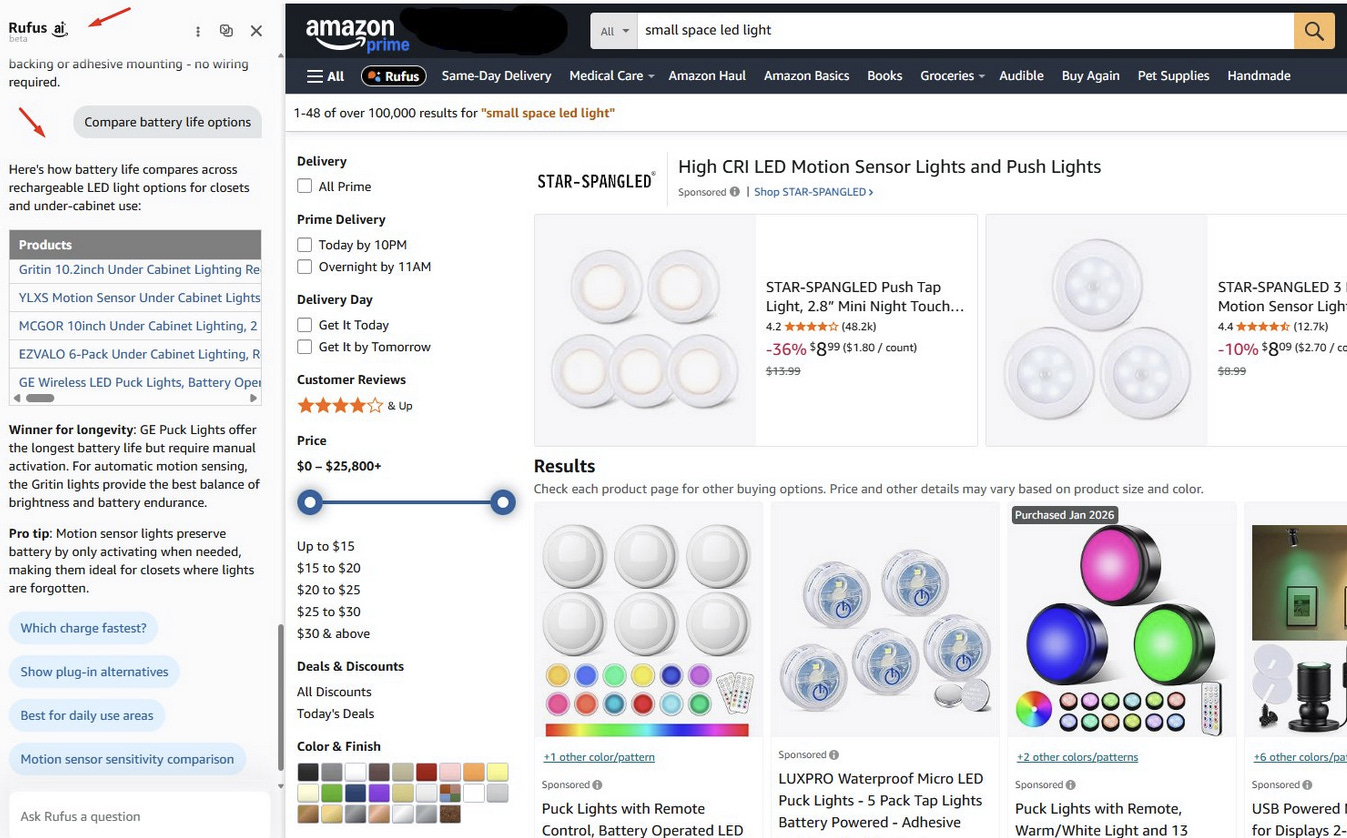
It’s more and more clear that Amazon aims to make AI-assisted discovery a standard part of shopping, shifting how customers explore products from traditional keyword searches. This can and will also impact your brand and your consumer’s journey’s. Wether it is at Amazon itself or that Amazon might set a standard it’s worth understanding what is happening and to adapt.
Rufus Auto-Opens on Search: The AI assistant loads automatically without waiting for user interaction.
Persistent Left Navigation Placement: Rufus now consistently occupies screen space during browsing.
Traffic Source Agnostic: Users coming from Google are also directed into the Rufus experience.
Increased Adoption Efforts: This is the most assertive rollout of Rufus to date.
So for example, but not limited to, I think, that PDP’s are becoming training data for Rufus, so this means you really need to think about how to optimize PDP’s both for consumers and Rufus.
Brand stories are going to matter more as well, but in a way Rufus can understand them.
This exactly fits into the narrative of brand connections news that I read the other day on Google Ads. Google Ads also is testing with “brand links”. I read that on LinkedIn:
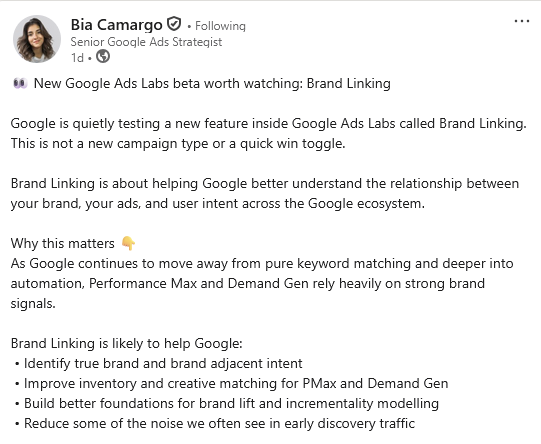
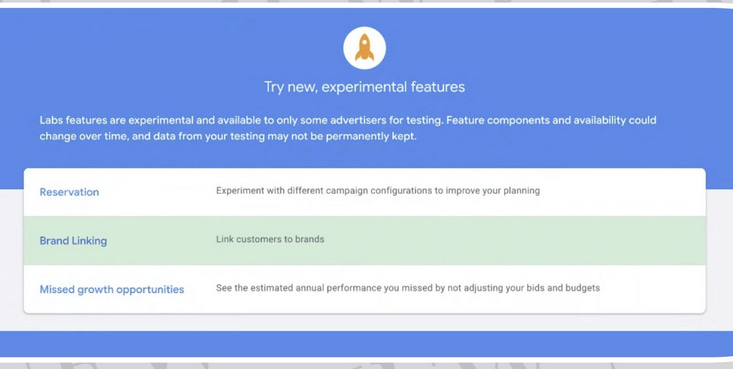
Thanks Hunter for the insights.
Thanks Bia for the news
🫡Open to new opportunities
Thanks for reading, liking and subscribing, it means a lot to me! Hope you liked it. Slowly I am considering new opportunities (also international):
Contact me via LinkedIN → https://www.linkedin.com/m/in/alexbaar/
Checkout my archive of previous newsletters if you want to read more :