

Good morning! Thank you for reading my newsletter on global marketing and retail.
Today is the shortest day here in the western hemisphere. After today, the days will lengthen again (yay)! The holidays are coming! Be safe and enjoy them!
🇪🇺 EU-Google probe and what it means for SEO
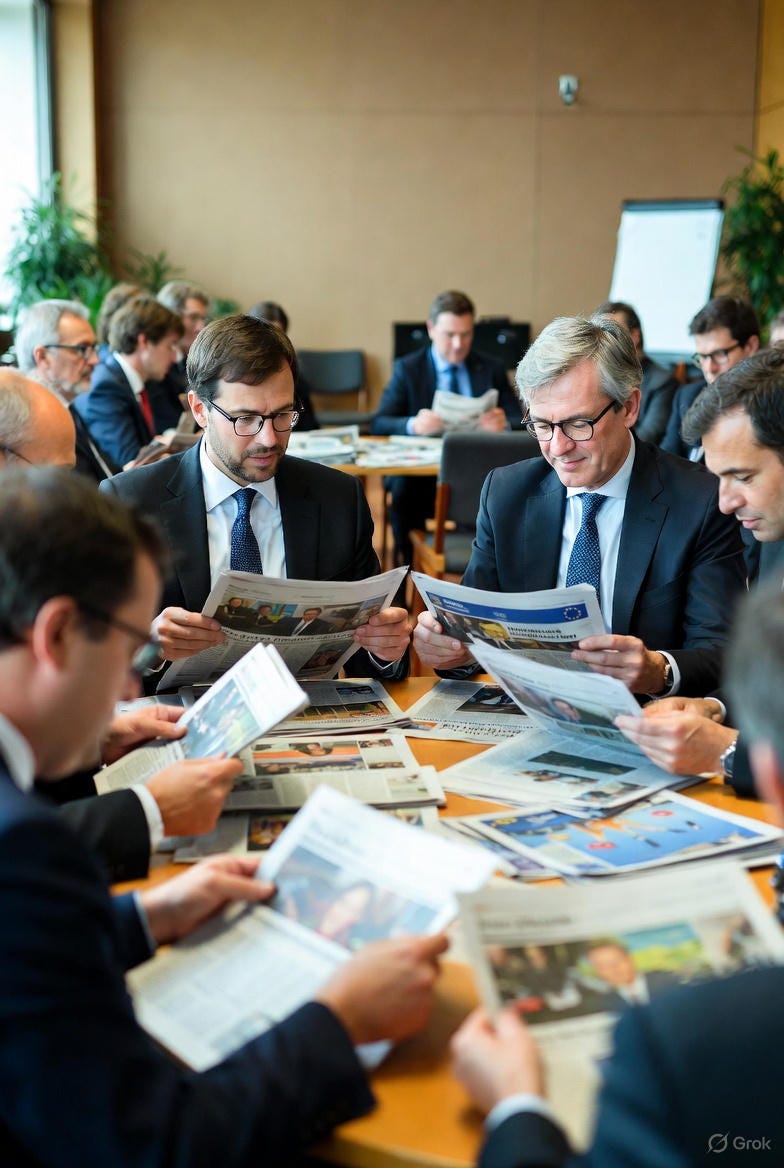
The European Commission has launched a formal antitrust investigation into Google. Now wether you are for or against is, one should dig into this as it has an effect on SEO, if you are active in Europe. Great thing is that Search Engine Land, did that for us. Read along:
Even before any formal EU decision, leading teams are shifting from “rank for the keyword” to “be the primary entity answer wherever the model looks.”
That involves:
Strengthening entity clarity with schema, consistent NAP, and structured data so AI systems can associate queries, topics, and attributes with your brand.
Auditing how your brand appears in AI Overviews, major chatbots, and vertical AI tools, then tracking inclusion, sentiment, and factual accuracy as emerging visibility KPIs.
Reviewing robots.txt. Blocking may protect IP but reduce exposure, while remaining open may increase AI visibility while raising licensing and valuation questions.
Educating leadership that traffic is no longer the only outcome of visibility. Being cited, summarized, or used as a grounding source in AI outputs has value, but that value must be defined and measured internally.
As legal and technical frameworks evolve, the strategic challenge is to remain machine-readable and rights-aware, asserting control over how content is used while ensuring the brand remains present wherever AI answers are trusted most.
A must follow topic. In general for “real” SEOers it’s what we always said: “produce real, high quality content”. That will always work, yes also in the AI (zero click) world.
More details: https://mashable.com/article/data-center-investments-reach-61-billion-dollars
🇨🇳 Meanwhile in China, Hainan —> Dubai/Singapore/Switzerland on steroids?

Never been to Hainan, still on my list, and these new measures announced for Hainan make my visit go up on the priority list. Hainan will get lots of advantages for entrepeneurs! China is basically building a "greatest hits" of global free zones: Singapore's tax regime, Switzerland's medical access, Dubai's visa policy, all in one giant tropical island attached to the 1.4 billion people Chinese consumer market.
Very nice and this might become a great or even the greatest place to live and work!
Commerce: You can now import most products in the world (74% of all goods) entirely duty free into Hainan. And, if you transform the product and add 30% value locally, you can then send it to the rest of mainland China completely tariff-free.
Taxes: They also have insanely low corporate tax rates: 15%, lower than Hong Kong (16.5%) and Singapore (17%) or the rest of the mainland (25%).
Health: Basically the rule is that if a medicine or medical device is approved by regulatory agencies anywhere in the world, it can be used in Hainan - even if banned on the mainland. Which undoubtedly makes it THE place in the world with the widest range of medical treatments available.
No firewall: (yeah): Companies registered in Hainan can apply for unrestricted global internet access
Open Education: Foreign universities can open campuses without a Chinese partner
Visa Free: 86 countries get visa-free entry, probably one of the most open places in the world
Money: Special accounts let money flow freely to and from overseas - normal mainland forex restrictions don't apply
https://english.news.cn/20251218/2401027382914aee9b07f007dba8b060/c.html
And: Arnoud Bertrand
🆒Cool story: how to come up with unique product ideas and sell them
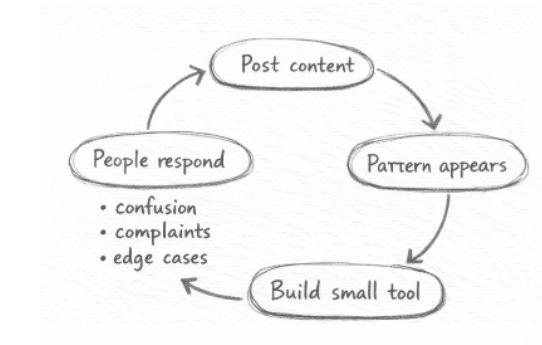
Creative thinking often means combining familiar ideas in unexpected ways. Exactly what this guy did! Very nice and motiviating story I think. A story of testing on social media, listening to the audience and quickly developing and improving.
“I didn’t know if it was that good of an idea, but I just posted it on Instagram to see how it would do,” he said. “The video went wild.”
Then, he paid close attention to what his audience was saying about the product. One comment popped up over and over again: “Make it hold two cans,” he said. “So that’s what I did from there, and that did even better.”
Satterlee believes in creating a product quickly and iterating from there, rather than spending months trying to perfect it.
Details:
🤖AI product management metrics and how to deal with them
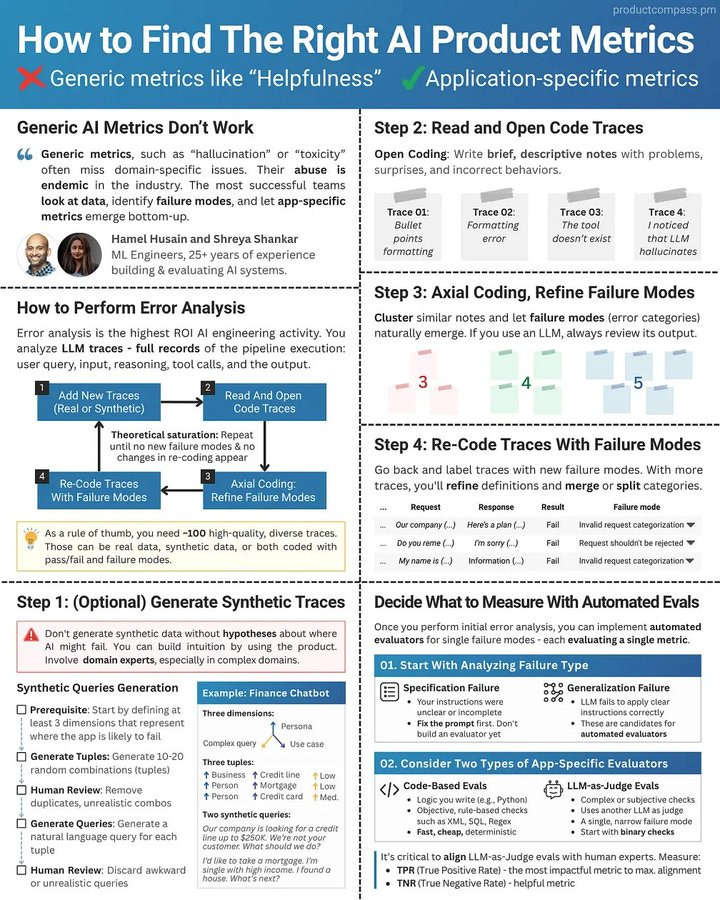
As you know by know, I am also very much interested in product management, in developing great products that resonate with users.
As we are more and more heading towards “AI product management” (see details here), I will share more on that topic the coming weeks.
Traditional PM assumption (”predict and prevent failures”) contrasts with the reality of AI products: you can’t fully predict or prevent all failure modes upfront because LLMs show failure patterns that you only discover after you ship the product. So an AI PM must accept there will be failures shipped. It’s how you deal with it.
So a AI PM needs to:
Discover failure mode patterns through error analysis.
Once you identify a failure mode, you must decide what to do with it. If the failure isn’t critical or can’t be fully fixed:
Measure it regularly with evals (async)
Track progress/regression -
Monitor human model agreement for LLM-as-judge evals
If the failure is critical, use guardrails (sync): - Fix it live - Or block the response.
Continuous Improvement. Quality isn’t a one-time feature. It’s a loop. You don’t try to predict failures. You trace them, then decide how to respond.
Source: Paweł Huryn
😎Fintech time for a glimpse into a possible future
Imagine the future of payments: a smart card that lets you swipe between USDC, BTC, ETH, SOL, or any currency, stable or volatile, and pay anywhere, instantly.
No intermediaries dictating your assets. Freedom: full self-custody, seamless liquidity. Cool isn’t it?
🏆Greg Isenberg sharing a mental model: build around moments
Greg Isenberg had a nice topic in his newsletter this week. Basically it’s about the topic, that many profitable internet businesses that used to need a team, now need one extremely motivated person, AI, and an organic content machine.
It also emphasis the creation of organic content and a community. Unfortunately, despite, Greg’s organic information story, it’s still not possible to share his newsletter in an easy way, so I copy paste a few highlights below.
Do subscribe to his newsletter, I would say for future content on this topic.
The real shift is that judgment can now live inside software.
Before, software mostly moved data around. Humans still had to interpret, decide, and follow up.
Now, that thinking can be embedded directly into products, and agents can execute it continuously.
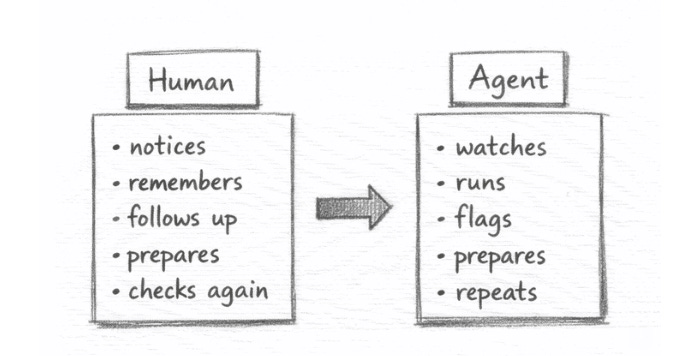
This enables businesses built around moments, not platforms.
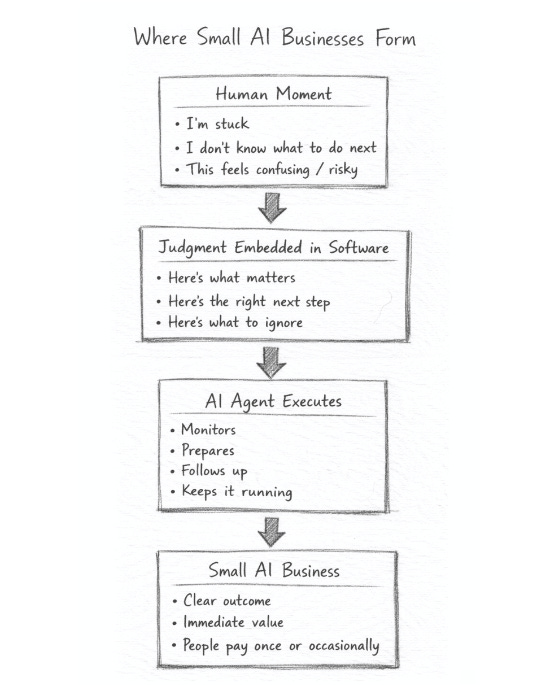
These moments happen constantly, and they now support real products.
You see this clearly in tools that deliver clarity at exactly the right time.
An app that reads a lease and highlights the three clauses that matter for this renter, with plain-language explanations.
A product that looks at Stripe data and explains why revenue moved last month and what levers to pull next.
A mobile app that reviews photos of a home and suggests which repairs deserve attention first and why.
Software that listens to a meeting recording and produces a short list of decisions, owners, and follow-ups.
Each of these replaces a small piece of thinking that used to require experience or a paid expert. The product doesn’t do everything. It does one thing well, at the moment it matters.
If you build an organic content machine, you will have an unfair advantage.
So I think it’s a very smart and nice way of thinking. How I see it, this model of “moments” can be used everywhere. From large retail apps to small cross-border marketing ideas or small micromoments.
The product doesn’t (always) win by having more features, it wins by showing up at the right moment with the right judgment for example:
A customer is stuck choosing between products
Someone hesitates before checking out
Most apps respond in that case with even more filters or “hover overs” but if you think about “moments” you can respond with contextual judgement, like:
“Here’s what matters right now.” (for most professional kitchens, acidity and consistency matter more than origin. This one is the safest choice for daily use.)
“People like you usually choose this.”
“You’re about to miss X.” (restaurants ordering this usually add frying oil.
You haven’t added it yet.) This is contextual, and on operational failure not directly selling).
Basically context-aware guidance at the exact moment of doubt.
Great way of thinking!
Greg’s newsletter: https://www.gregisenberg.com/
🇨🇳 🇩🇪 Cultural differences between China and the West (Germany)
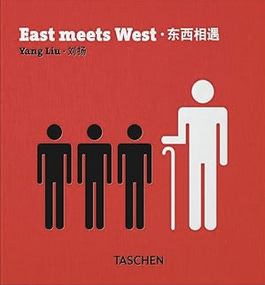
I stumbled upon this website that shows artwork from a Chinese-German artist about cultural differences between West and East. I recognize them all! Checkout the post, I cannot share a screenshot due to copyright reasons but the link has plenty of examples.
Details and source: https://digitalsynopsis.com/design/east-meets-west-cultural-differences-illustrations/
The book: https://www.amazon.com/Yang-Liu-East-meets-West/dp/383655402X?tag=digitalsynops-20
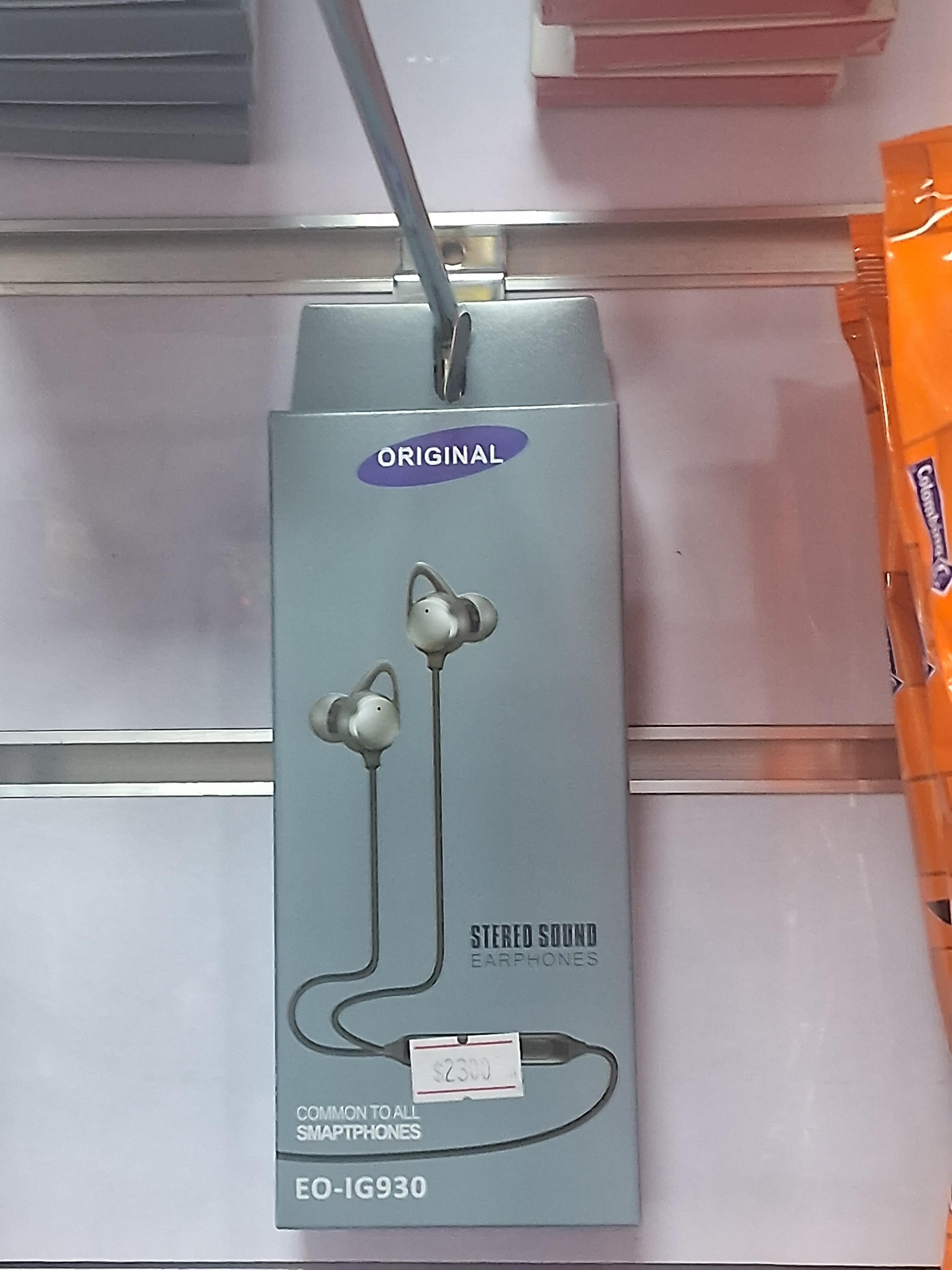
😅 Smart brand name: “Original”
Always buy the original!😅
Thank you!!
Thank you so much for reading, liking and subscribing! I wish you all a great day and hope you liked this edition.
Alex
🫡Open to new opportunities
Thanks for reading, liking and subscribing, it means a lot to me! Hope you liked it. Slowly I am considering new opportunities (also international):
Contact me via LinkedIN → https://www.linkedin.com/m/in/alexbaar/
Checkout my archive of previous newsletters if you want to read more :