

I’m currently traveling in Asia, so I wanted to share a few retail trends and store formats I’ve spotted along the way.
For seasoned China watchers, some of these might be familiar news, but I wanted to share my perspective after seeing these outlets myself. Feel at home again in Asia! Check it out below.
🇭🇰 🇨🇳 Galbot, the robot store in Hong Kong
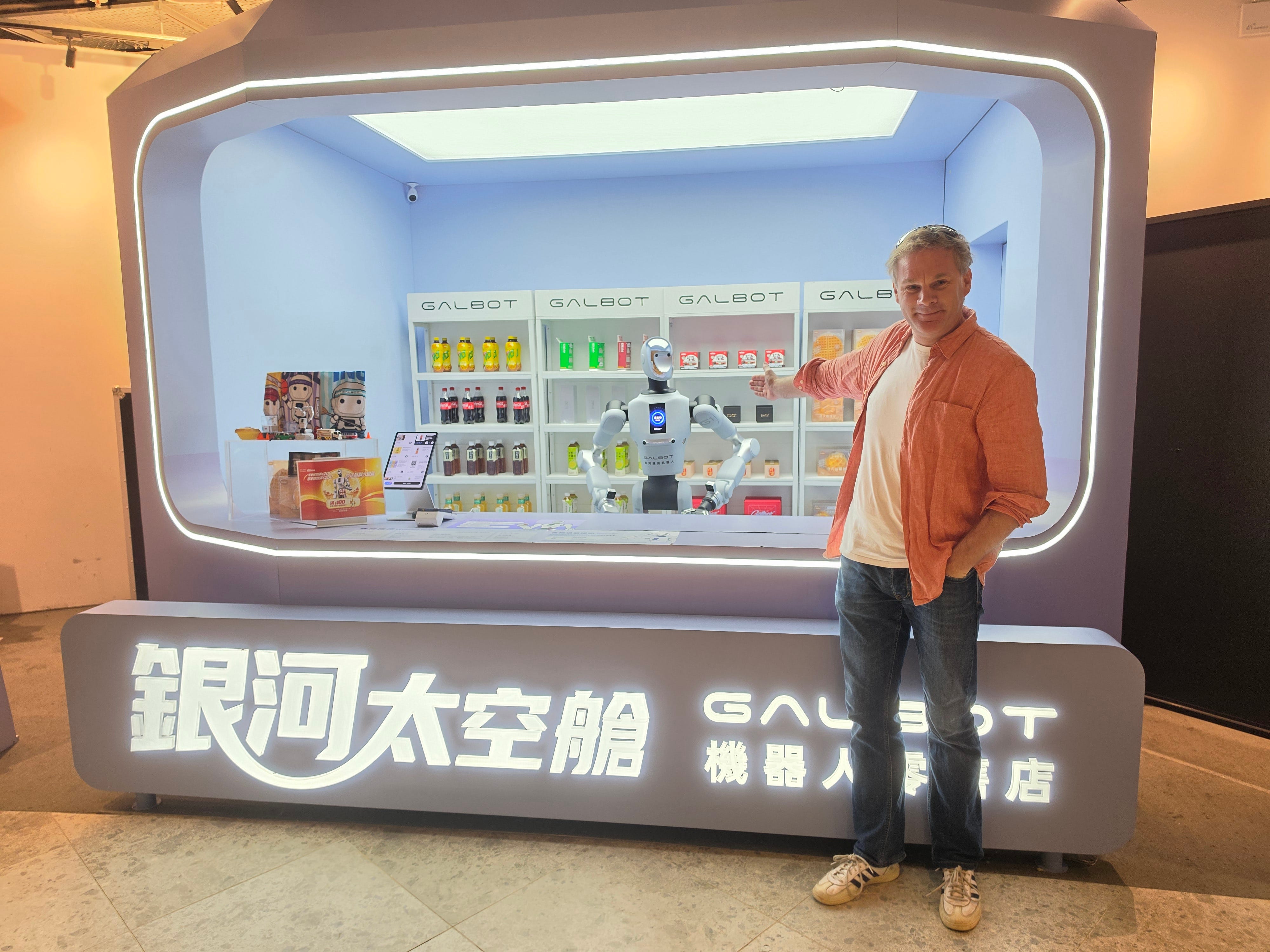
Now, I was already searching for it in Shanghai a few days earlier, but the Shanghai one, near the bund was removed. Luckily I stumbled upon another one in Hong Kong where they now appeared at a few spots. The first one I spotted during my morning walk near victoria harbor, that one was unfortunately out of order, but the one in Kai Tak mall was operational.
Galbot is developed by a mainland company, but they're now expanding outside the mainland. It’s very cool to see how they bring these concepts to life to learn and iterate.
The assortment is quite limited, but the experience makes it fun. There’s a big chance this concept works and that future stores (and bars) will operate with robots like this.
The robot is a bit slow, I ordered a Coke and it delivered it perfectly after about 30 seconds.
It even sings and does promotional pitches in English and Mandarin.
You can order via a touchscreen or just talk directly to the robot.
🇭🇰 Hong Kong Retro vibes at multiple places
After the futuristic “Galbot” robot store, I also found some retro stores. Wellcome’ Hong Kong’s oldest supermarket chain has redesigned several key locations into neighborhood time capsules. Very nice idea, I visited the The Yau Ma Tei branch It’s a 1950’s style, wet-market with retro turnstiles and I visited the branch in Kennedy Town where it has more a 90’s style and it’s hooked on the iconic “ding ding” tram that ends there.
It’s very complete retro including some retro products and retro advertisements.
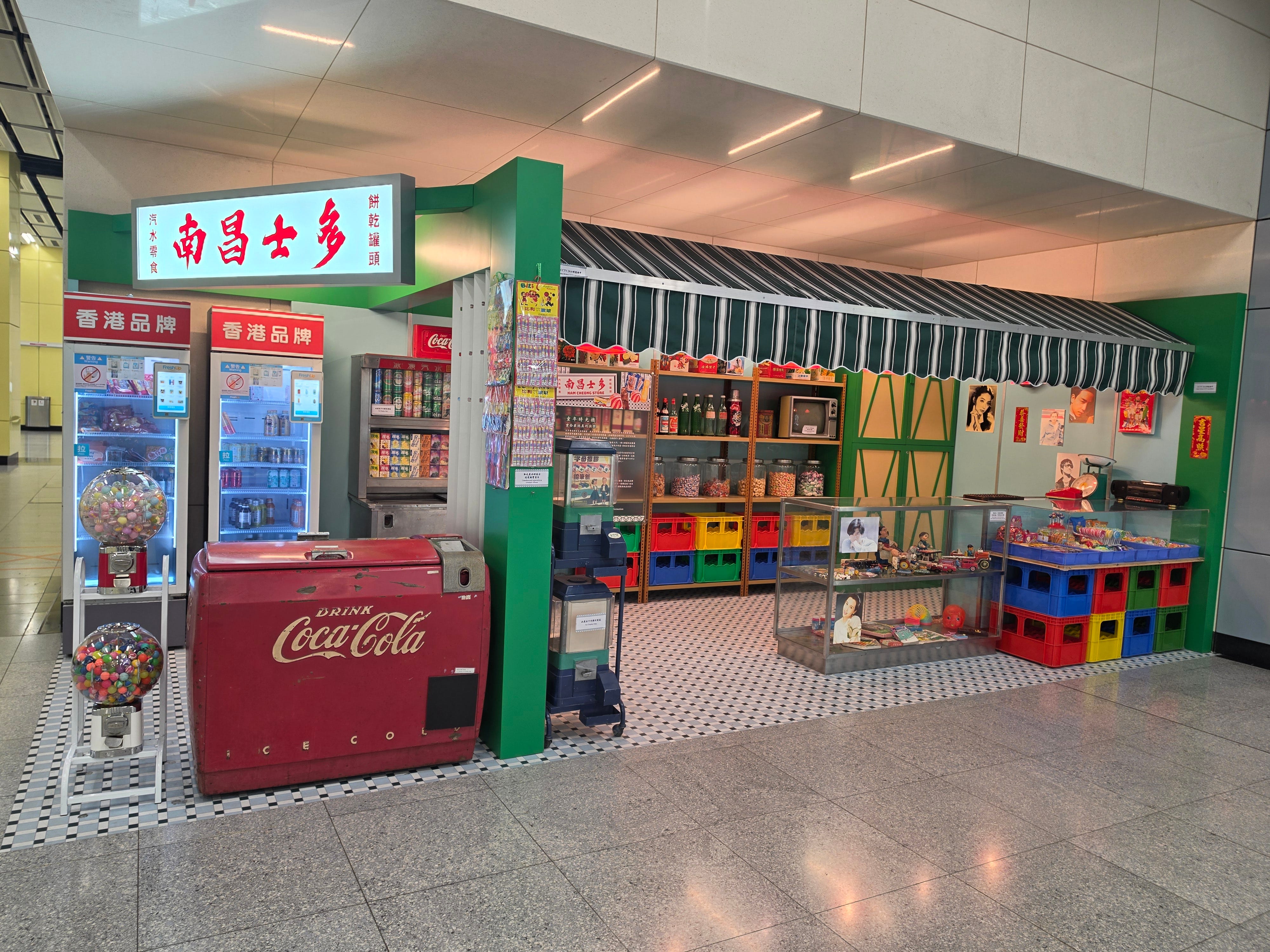
Then inside the paid area of Nam Cheong MTR station, I stumbled upon the “Nam Cheong Store” It’s a complete throw back to a 1960s and 70s neighborhood corner shop, fitted with vintage green shelves, old tin toys, and a classic red Coke fridge.
I see it as “nostalgia marketing” and from what I read it’s part of the “Hong Kong Story” project. They built an instagrammable “time capsule” that gets busy commuters to pause and snap photos.
It includes low-footprint automated commerce. There is no real shopkeeper behind the counter, the retro set actually has a modern vending machines selling glass-bottled drinks and nostalgic childhood snacks like candy.
🇨🇳 Shanghai: Alipay tap and go payment terminal


In Shanghai I liked these payment terminals from Alipay. Not only they look very futuristic but they also work great.
On the right hand side you can tap and pay, on the left hand side you can scan your QR code for payment. Both options work.
I tried tap and pay a few times and then it gives you automatically a discount but not only that you can also get an automatic discount on a purchase in the same store the next day. Eat that “Wero”
Great way of a payment provider helping stores to get customers to return.
In the screenshot you see the screen I got after paying via “tap and pay” in a family mart convenience store. Historically, registering for a merchant’s loyalty program at checkout meant opening an app, scanning a QR code, allowing permissions, and filling out a form, creating friction at the register. With this NFC workflow it’s much easier.
Tapping the terminal automatically opens the membership landing page inside Alipay.
Essential details (like phone number or birthday) auto-populate.
The customer joins the loyalty club and completes the payment simultaneously in just one tap.
Really it takes a few seconds and you all do it on your phone.
🇨🇳 Shanghai: JD mall in Qibao


Tech Buzz China once triggered me when they wrote about Jing Dong’s new concept, so I could not resist a quick visit this mall near Qibao, old town. It’s almost directly connected to the Shanghai Metro so it was easy to reach. Be sure to follow Tech Buzz China for the latest developments and insights!
JD organizes their department store into category specific experience hubs, much like shopping online complete with lifestyle corners.
All these corners and zones, let you test appliances in real time. You can test coffee makers (like De'Longhi machines with real baristas for example). Or you sit in some kind of living room and you test a new television. It’s like IKEA you see the products in a lifestyle environment. I saw some washing machines even working. No I didn’t do my laundry there (thought about it) but they were just showing how the machine worked and the sound it made and now the extra cool part:
All is connected digitally. All the display tags update in real-time to match online promotion prices on JD.com. You don’t have to carry anything out. You test the coffee maker or washer in the mini-store, scan the QR code with your phone, check out via WeChat/Alipay, and JD’s logistics network delivers the unit straight to your door (often same-day or next-day in Shanghai).
😅 Time for a laugh: I had free food every day
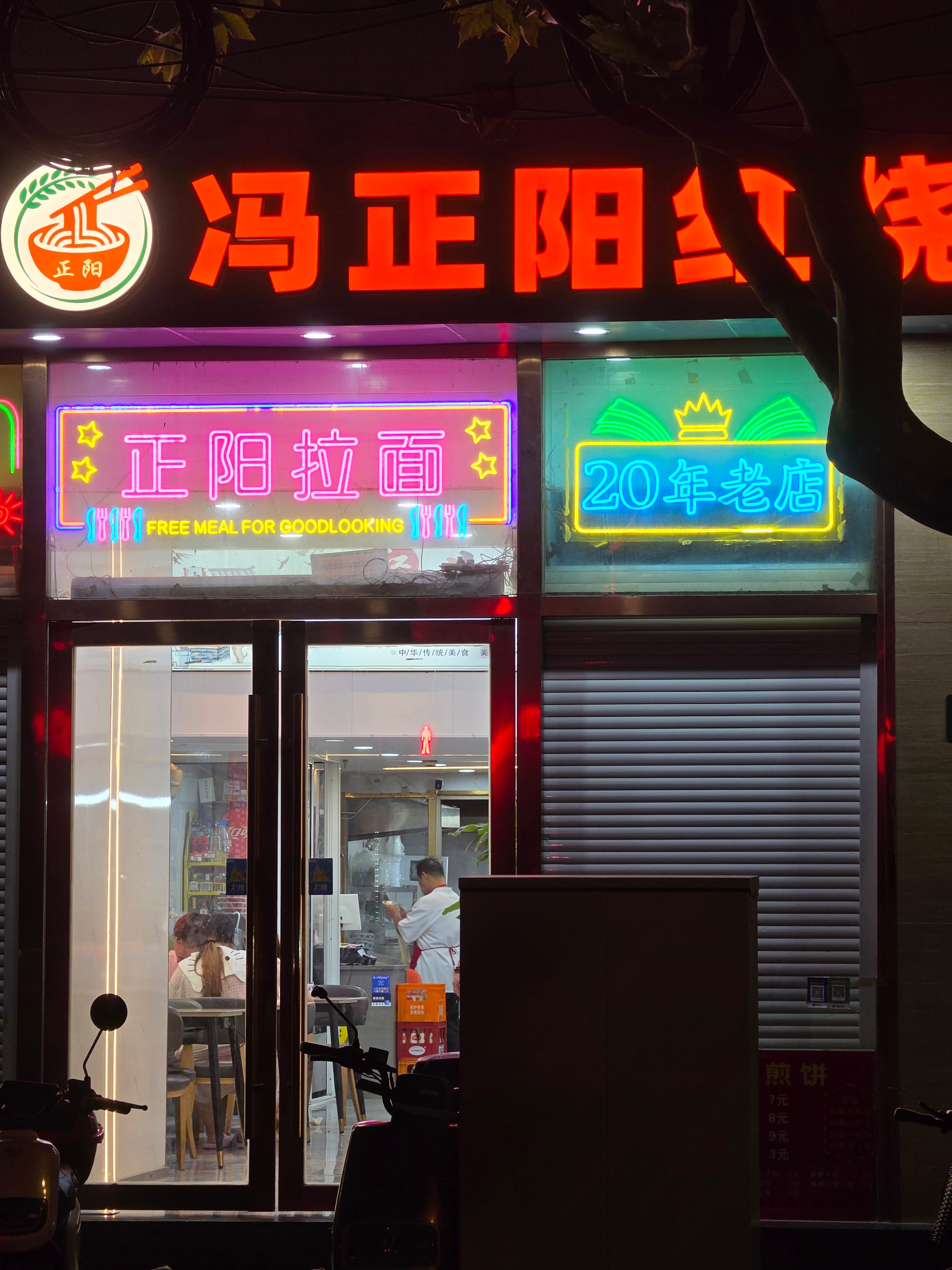
I had free food all week in Shanghai!😅
🇨🇳 Convenience: collective food ordering & parcel pickup
Things are just so convenient in mainland China here are two examples from my recent trip.
First, we had a dinner with four people. Naturally, there was a QR code on the table to access the menu and order directly from our phones. But what is then so convenient was that when each of us scanned the code individually, it opened one shared, live overview of the table’s entire order (mini programme).
We were having a mix of Korean food, and because we could see exactly who added what in real time, we didn’t end up ordering double.
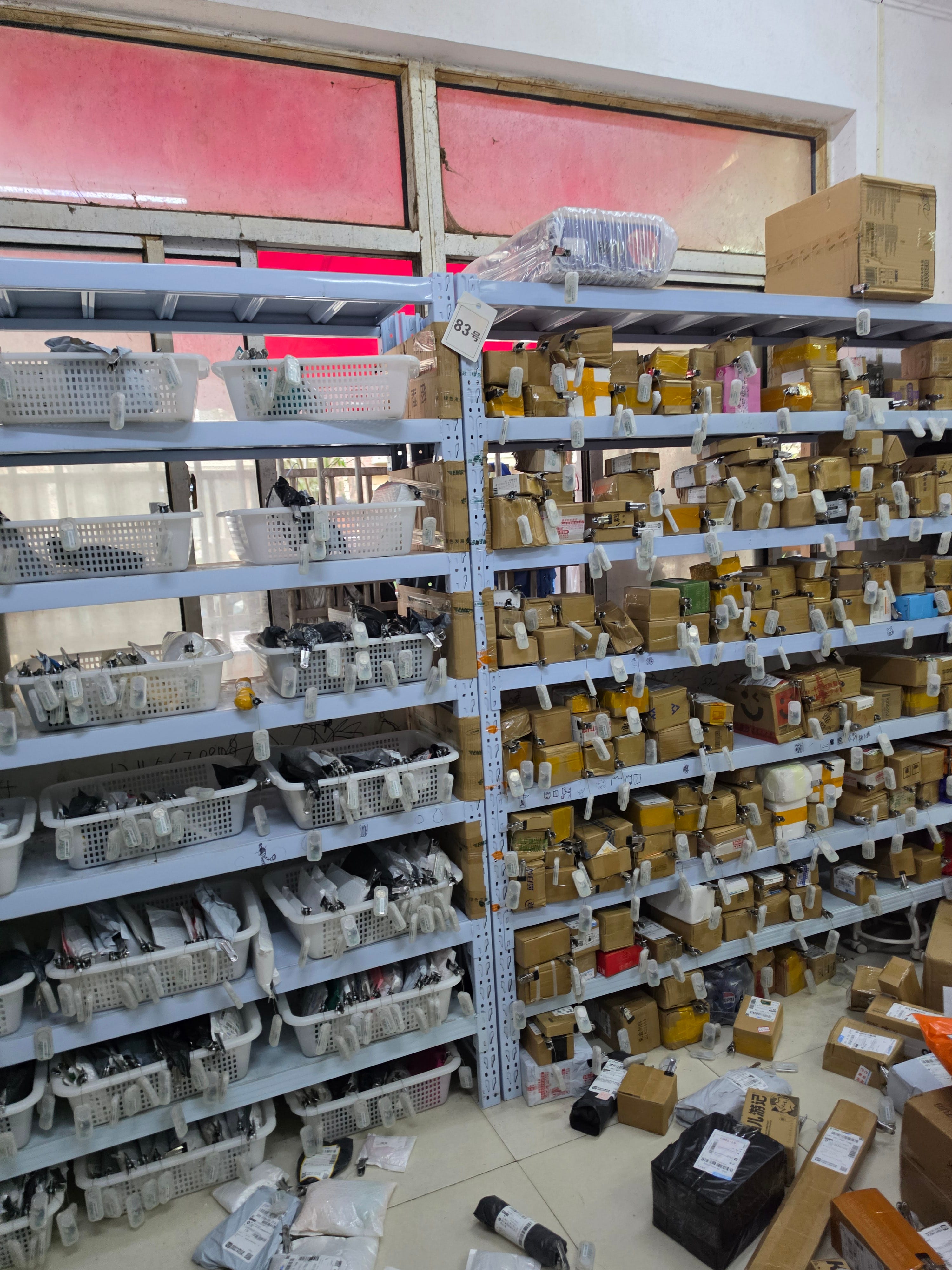
Second, I was visiting a friend’s place. The way it works in Shanghai and most Chinese citie is that a block of flats or houses forms a gated “community.” When you enter through the main gate, there are shared communal services inside. Where my friend lives, they have a central spot for parcel deliveries, but the volume of packages is so huge that a standard bank of locker boxes just wouldn’t cut it. It’s really huge they order anything online.
They had a new system in place: every parcel gets fitted with a small smart tag. When you walk in and scan a QR code on your phone, the tag on your specific package starts beeping and flashing. You grab your parcel, scan it one last time at the self-checkout counter, and walk away. My friend mentioned it was pretty new, and it worked great. I took a picture but not the best one, sorry about that but you see the tags if you look closely. I think it’s this system so it goes beyond just “tagging” it also has some smart solutions build in it.
🇨🇳 How to get people in your store: use a big gentle monster
I was walking in my favorite area of Shanghai the area around Shaanxi Nan Lu. Great area I can fully recommend.
It turned out to be House of Nowhere, a concept store that uses hyper realistic art installations. The dog itself looked completely asleep, but every now and then, it would subtly breathe or move, catching everyone off guard. Everyone, really everyone was filming in that store. So this must have a very high social share ratio.
Curiosity pulls you off the street and straight into the store. Once inside, you’re exposed to their high-margin product: futuristic eyewear and Tamburins, the Korean fragrance brand housed on the floor. I paid a bit of attention, my rough estimate is that 5-10% of the people inside also bought something.
Next to the dog, there is also a photo booth where the dog on screen changes into an outfit matching yours, so you can take pictures together. Unfortunately that one didn’t work when I was there.
Thanks for reading Crossborder Alex : Global Marketing & E-commerce! Subscribe for free to receive new posts and support my work.
Interested in more? Checkout my archive!
Or use my vibe coded search engine to find content tailored to you, I improved the search engine a bit. Let me know what you think.