

Goodmorning everyone! Well ticket(s) booked. In coming september I hope to inform you from Shanghai, Hong Kong and Taipe! I am sure I can find nice things to write about while traveling these places.
If any reader of my substack, is in these places and wants to catchup let me know! Shanghai I might be busy, visiting my former collegues there.
For now lets dive in to what caught my attention last week:
📧 Email marketing: big test from google → confirmation flow change
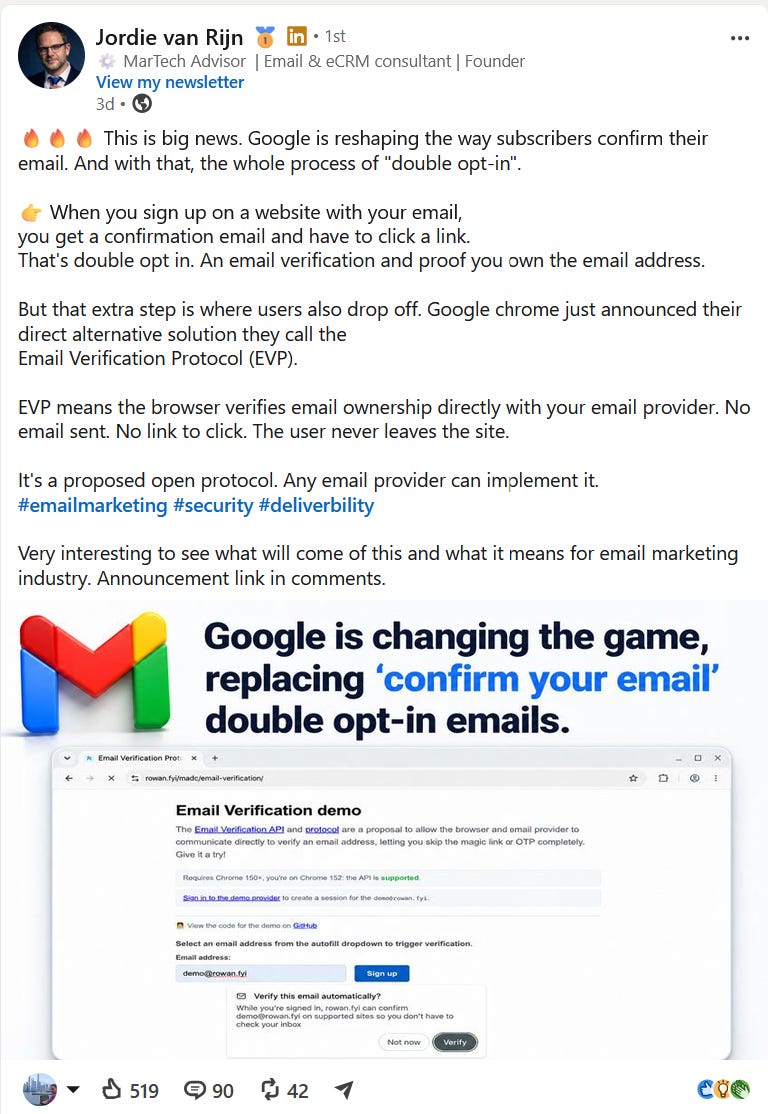
First a shout out to someone who I think also was starting in email marketing around the time I was. But he is still very much in it. Thank you Jordie for sharing the news above.
I still have an -email marketing heart- as I call it myself. Still like it although not anymore daily busy with it.
Email is fun and it also has a huge technical component related f.e. to deliverability. So with posts like this from Jordie, many email geeks get crazy! Therefore its very good to also read and understand the comments on Jordie’s post. F.e.:
Anything that simplifies and speeds up the signup process is a good thing. Less friction = fewer drop-offs. And if consent is captured cleanly along the way – even better. The EVT (Email Verification Token) seems to deliver a cryptographically signed proof with timestamp, email address and nonce („number used once"), so a one-time, session-bound security code. That sounds technically solid.
What could become problematic:
Deliverability:
The double opt-in process always had an extremely valuable side effect – it immediately verified whether the email actually arrives at the target address. Spam filters, full inbox, wrong configuration – all of that was tested through the sending, the delivery and ultimately the click on the confirmation link. EVP only verifies that someone owns the address. Not whether your emails actually land there. That's a crucial difference. I can't yet assess whether the pros and cons balance out here.
For now I like it, I was never a big fan of double opt-in. Having said that, I have 10.000 unread emails in my mailbox😅 I do understand others might think differently.
Still this is only a test, many things can change and I hope it doesn’t only stay in the chrome ecosystem alone. Nice direction of problem solving.
Source: https://developer.chrome.com/blog/email-verification-protocol-origin-trial
https://www.linkedin.com/feed/update/urn:li:activity:7485645958790328321/
➡️ Agency alert: the ruthless analyzer: fun to play with
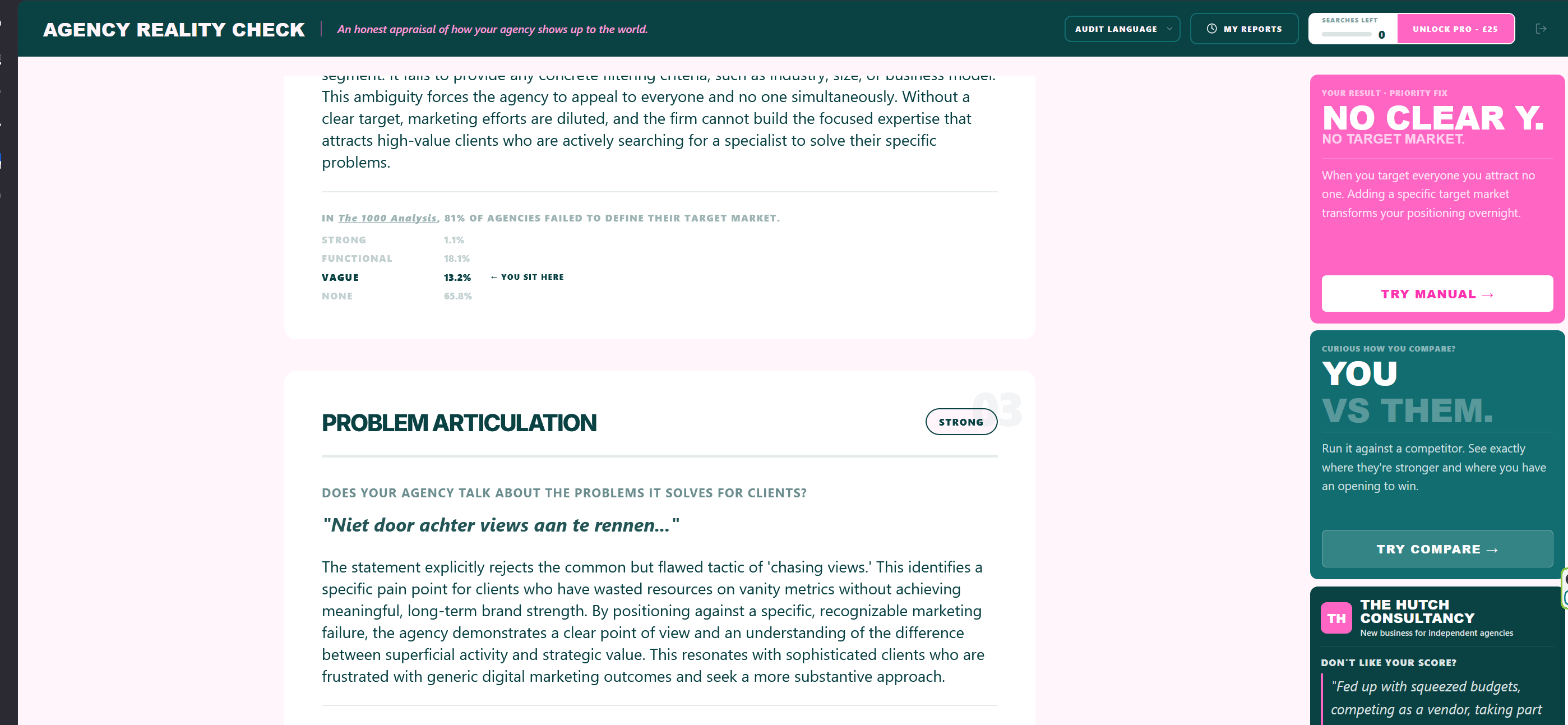
I stumbled upon an article about “agency’s” on “The Drum”. This guy did smart. He found an industry problem: “all agency’s look like each other” quantified it at scale with an AI tool he built himself (I guess vibe coded by the looks and that is totally ok, a few years ago you needed a development team for this!), published the findings as a sharp opinion piece on The Drum, and then pointed straight at the (partly) free diagnostic tool that generates the exact same ruthless feedback for any agency that plugs in their URL. Of course also paid options in his tool.
I like this way of thinking and this type of content is also something an AI cannot really copy or show in AI overviews.
Having said that I tested it with an agency who claims on their website “not to chase views” but in fact I know they do in daily practice. The real test is whether the agency can survive the questions that follow from that claim. That the Ruthless analyzer does not yet provide: a list of those questions, I think (would be a nice addition).
Still fun to use and a smart example of how to turn a real industry problem into both a lead gen engine and a useful tool.
Link to the analyzer: https://www.thehutch.co/agencyreality
Link to the Drum article: https://www.thedrum.com/opinion/there-are-25-000-creative-agencies-in-the-uk-why-do-they-all-sound-the-same-1
🇯🇵 Japan’s Cross-Border E-Commerce “WAFUU.COM” releases a mascotte & the art of Omotenashi
I like Japan very much. First country ever outside of Europe that I visited, I have been there many, many times also for longer periods, and I still have Japanese friends.
I know from experience it’s so much fun to shop Japanese products, you always find something remarkable and the service culture is amazing.
No wonder there are quite some websites that ship Japanese products into the world.
Some at ridicilous rates by the wa). That’s why its important to be trustworthy. Trust sells.
Wafuu is a trustworthy shop platform (on shopify) that now released a new Mascotte. What I find interesting is
It's a trust charactar, not a (just) cuteness play. Buying from a foreign site that ships to 125 countries is a low trust, transaction, especially if you do that the first time. Believe me I know, I buy a lot crossborder often from sketchy shops, often also to see how shops localize.
A friendly character lowers that anxiety without a single word of copy.It lives on the box, not just in the ad. WAFUU is putting Mochi on package inserts and socials, not just campaigns. Retention is where cross-border margins actually lives, so if this helps retention (which very well could) it’s great.
Very curious how this will work out. A mascotte is only a mascotte. Will it get a personality, and will it help increase trust in crossborder shopping? Usually in Japan it does. I am also very curious how this mascotte can and will be integrated in f.e. a chatsupport bot. Good luck Wafuu!
Writing about Japan this is another great conversation from fellow substacker Daniel Orenes Ferrandez , I recommended him before and I do it again. I think we have a lot of the same interests and partly experiences. Checkout this interview:
This is a must watch for every crossborder marketer and service and hospitality fan. I could recognize many things in the talk but I never thought so much about now in the AI era how that would differ in service perspective. Great topic.
F.e.:
How would you deal as an organisation with “saying sorry” in a chatbot, if you know there are 10–15 levels of formality for saying "sorry”?
Localization beyond translation: Expanding digital products into Asian markets like Japan requires adapting UI/UX constraints (script consistency, message density) and leveraging channel preferences like messaging super-apps. One of my hobby’s and this talk confirms that again.
While Western implementations of AI chatbots, might attempt to retain users in automated self-service flows or re-route them through alternative automated paths when an issue isn't resolved, having a smooth, rapid escalation path to a human representative is a fundamental requirement (a must) for Japanese customer experience. Now that itself I think is already so interesting. A research topic! How many steps it takes across the world in different countries to escalate to a human via AI chatbots.
In North America and Europe, AI product success is heavily measured by containment what percentage of interactions never reach a human. This creates a design incentive to "trap" users in self-service loops, re-prompt them multiple times, or bury the human transfer button behind nested FAQ trees. In Japan that is a high-risk because 56% of consumers will abandon a brand after just one bad interaction.
Something we can learn from I think. I think it’s fully right, chatbot projects I heard from (or worked with) usually have (partly) this objective : what percentage of interactions never reach a human.
Of course Omotenashi, I knew already. Love it. Maybe an idea to create an MD file with Omotenashi basics, so when I create a user story and let it check by AI, I automatically embed Omotenashi in it. I think I will do that.
Best Omotenashi example I find this video I recorded in Japan.
🇺🇸 AI recommendations on Amazon are a “third shelf”
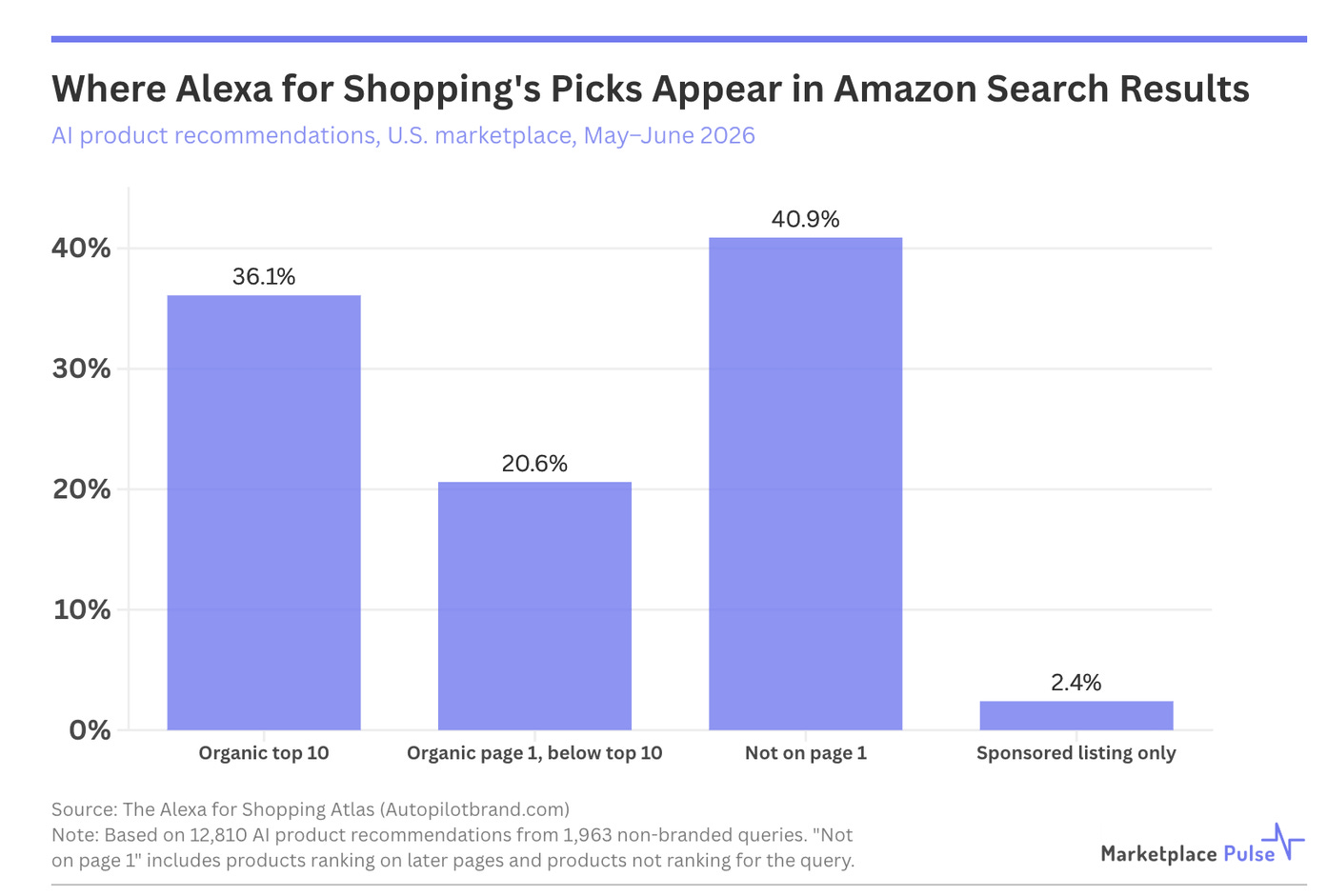
Now this is remarkable and keep this in mind, if you are a seller on any platform. It might change, probably will, but this “third shelf” is something to remind yourself of.
A new study of Alexa for Shopping found 63.9% of its product picks fell outside the organic top-10 for the matched search term
This creates a “third shelf.” Visibility is no longer just about ranking high or buying ads; it’s increasingly about how well a product’s data, attributes, and signals match the shopper’s actual intent as interpreted by the AI.
So I guess catalogs and intent-aligned optimization are more or equally as important as rank optimization.
Details: https://www.marketplacepulse.com/articles/amazons-ai-doesnt-read-the-rankings
‼️Similarweb: the generative AI Landscape report
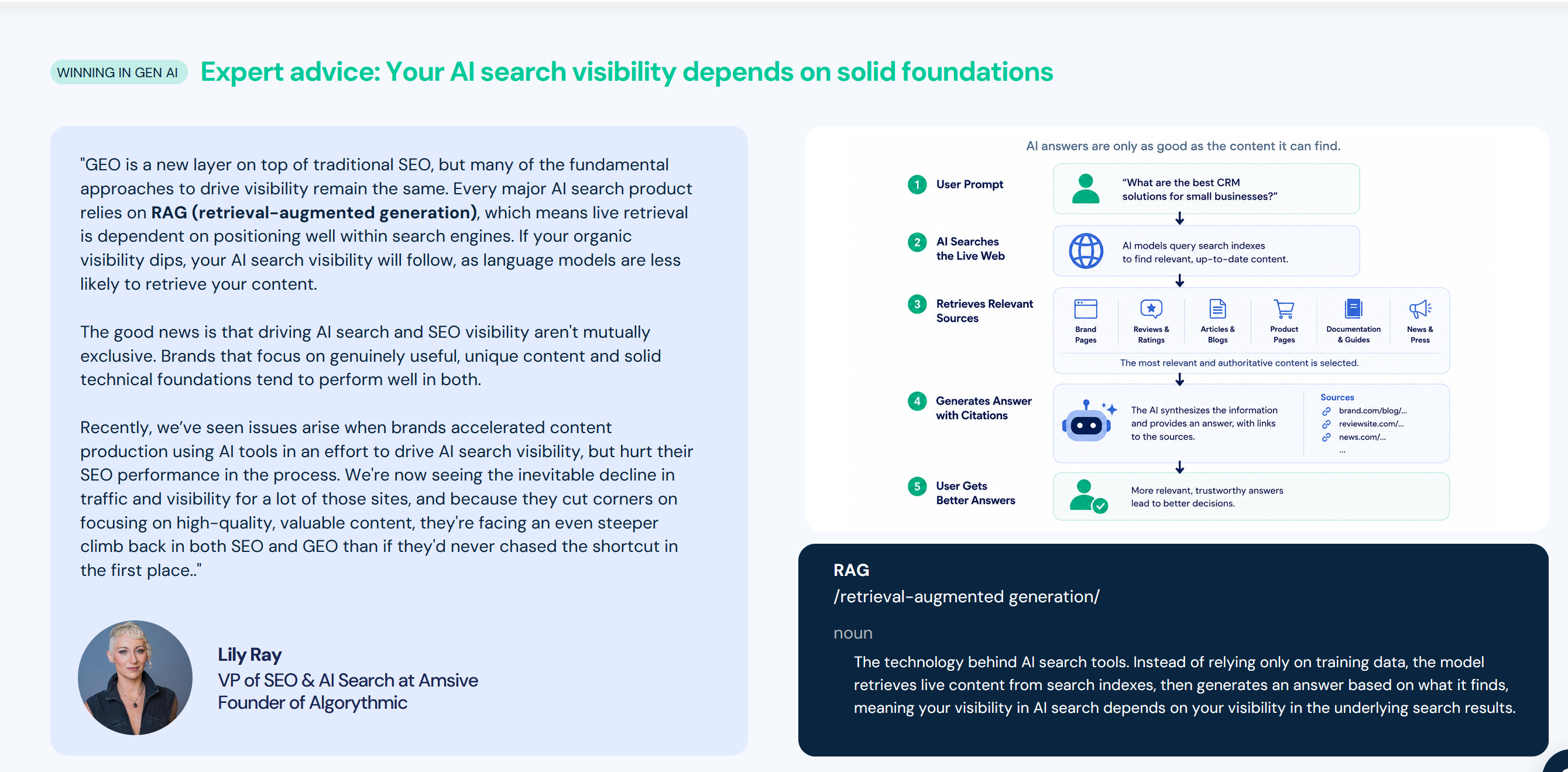
Similarweb i know them from way back, when we marketers all installed some browser toolbar or extension to feed their traffic panels and get those website traffic estimates. They’re still around, still sitting on a stockpile of data, and their new 2026 generative ai landscape report is out worth a read.
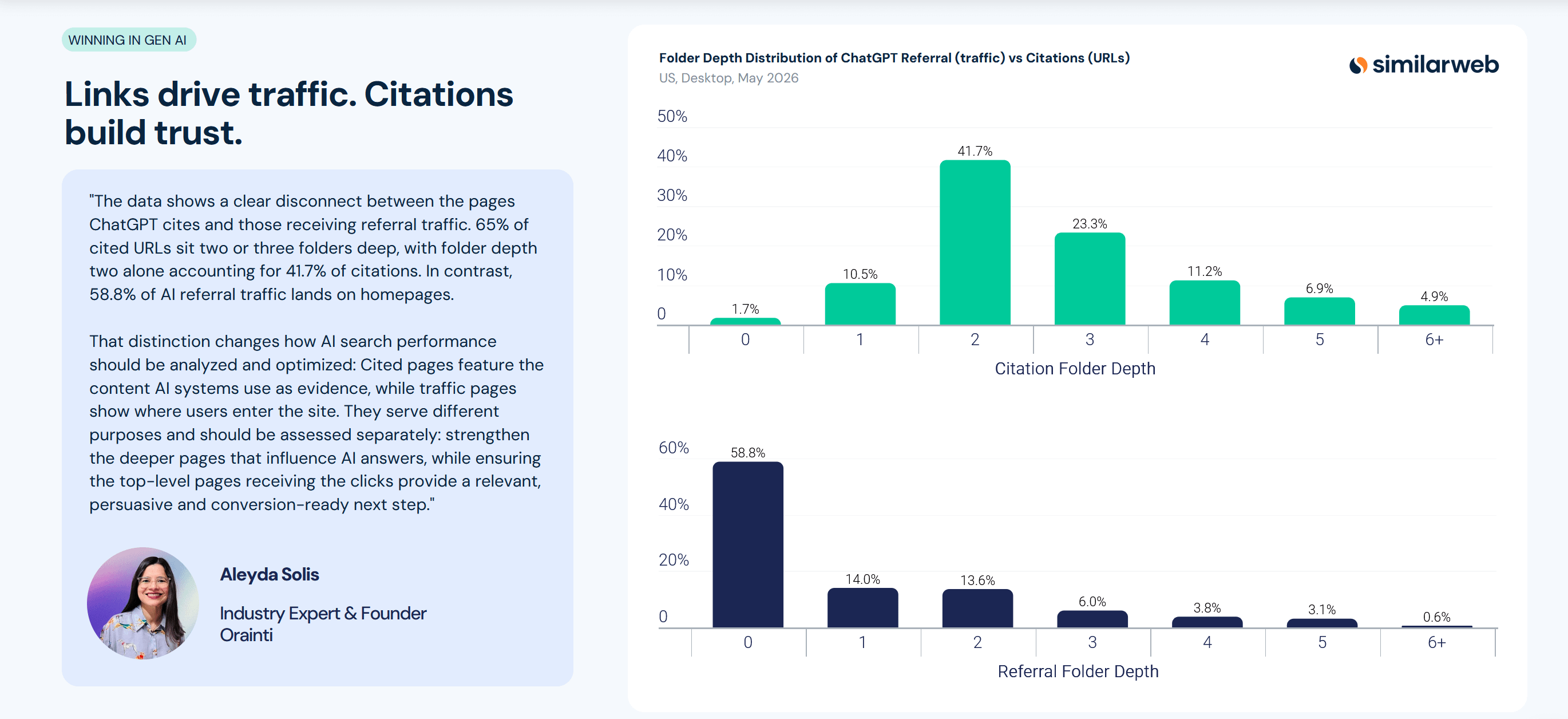
Highlights for me, same angle as Aeyda’s remark:
links and citations do two different jobs, and you have to optimize them separately.
Links and citations serve different jobs and must be optimized separately:
Cited pages (mostly 2–3 folders deep) supply the evidence AI systems use → they build visibility, trust, and influence the shortlist.
Traffic pages (58.8% of ChatGPT referral traffic lands on homepages) are the actual entry points → they need to convert once the user arrives.
So practically focus on creating pages that can and will be cited even though they are sometimes deep in your structure.
Make sure your homepage converts as there currently the clicks go!
This is also a good summary by the way:
Details: https://www.similarweb.com/corp/reports/2026-generative-ai-landscape/
😅You had one job!
Time for a laugh:

👋 Localisation matters, Amazon moving out of Singapore
I like testing local solutions, especially when I travel. Local apps, local marketplaces, its more fun. See what’s there, see the differences in UX, see the trends.
Often I get also stuck on that journey (local sim with call option needed, bad or non existing translations, chatting with delivery drivers) all part of the experience.
Therefore happy to read this in a way:
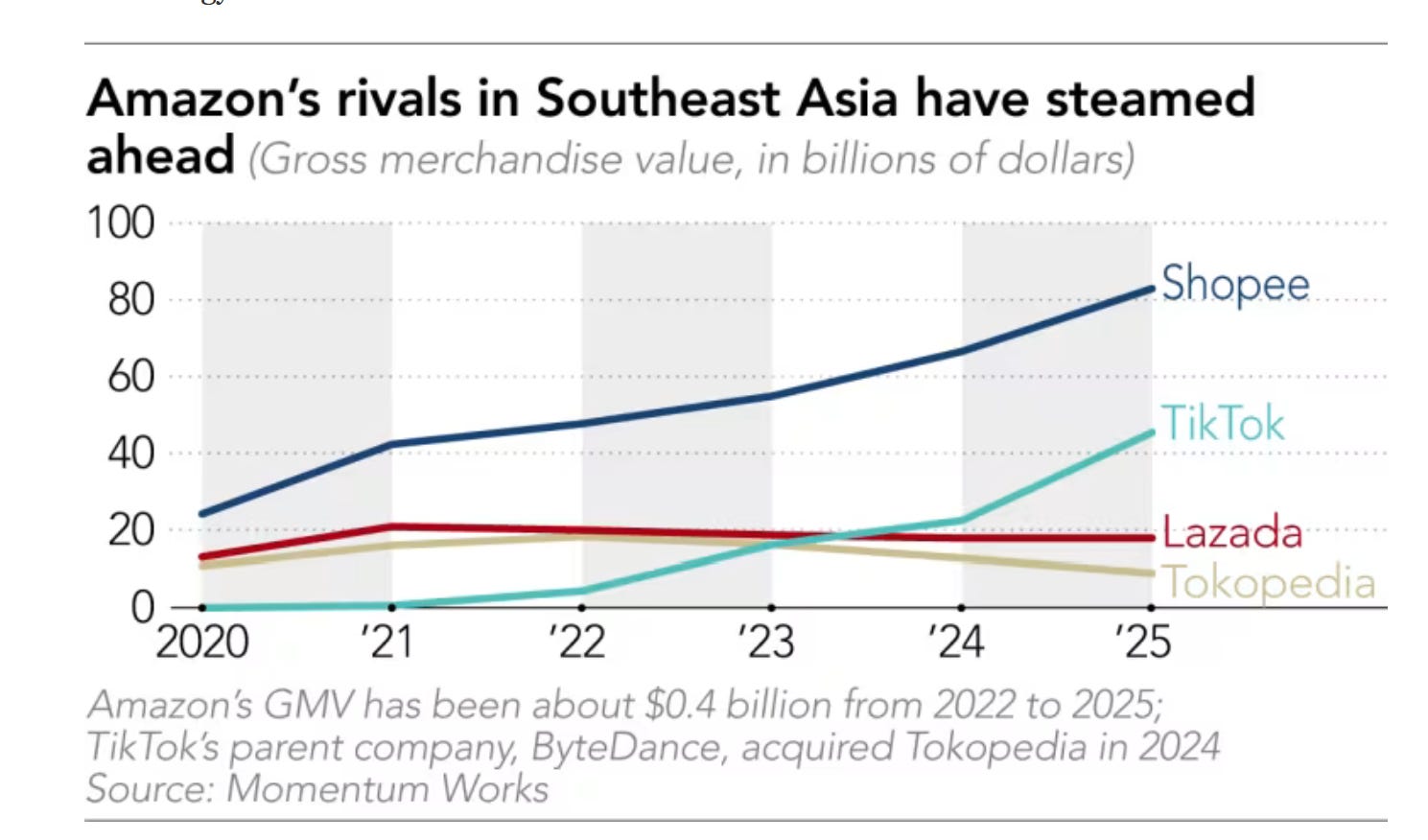
Amazon, the world's biggest e-commerce giant, has effectively admitted defeat in Singapore. On July 6, the U.S. company began phasing out its fulfillment service, whereby it stores goods for retailers in its facilities. Amazon Fresh, which delivers groceries within a two-hour window, will cease operations and third-party sellers will also be affected.
Shopee was a too strong competitor appearantly.
That’s why localisation still matters.
Thanks for reading Crossborder Alex : Global Marketing & E-commerce! Subscribe for free to receive new posts and support my work.
Interested in more? Checkout my archive!
Or use my vibe coded search engine to find content tailored to you, I improved the search engine a bit. Let me know what you think.