

Not sure if I can travel to Asia given the circumstances (as I fly with Etihad), so a regular edition of my newsletter instead. Normally I would have written this from an Airport and I would have combined it with some airport experiences. Nevertheless in this edition I did write about a great airport experience, just not one from myself, read on!
👱The Risk of AI content, how human written content wins
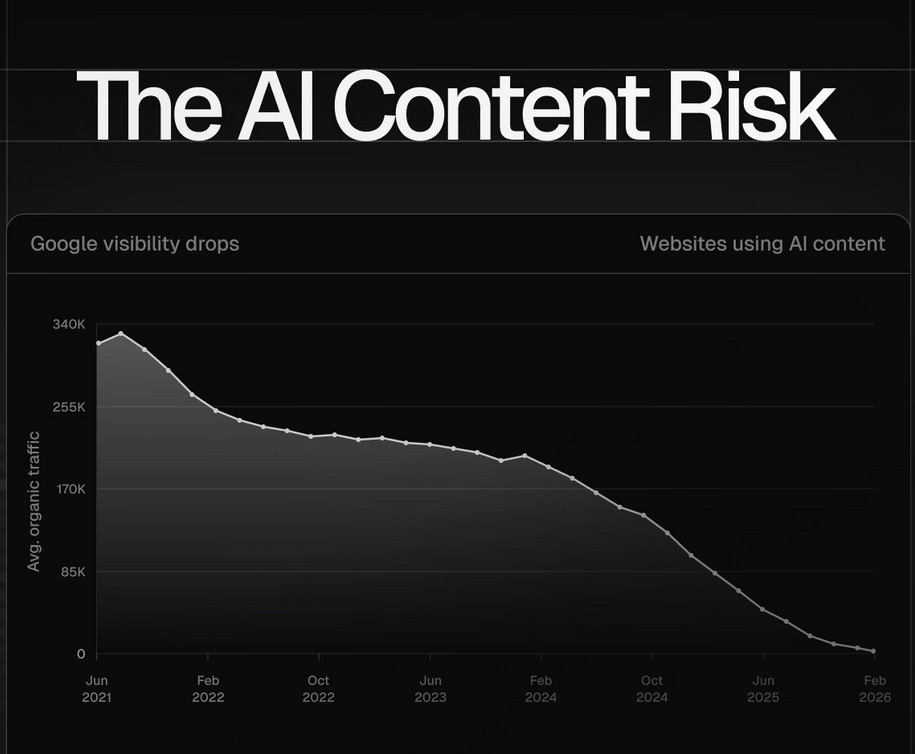
I think we all have the same feeling: purely expanding with AI-generated content without any quality checks or improvements is not good. Still, I know many companies that do just that. Let this research be a warning! Quality content helps us all, and I think it’s a very human activity to decide what constitutes quality content and in what form. You can and should ask AI for help, but you should focus on the human element.
Important considerations while creating AI content
1. Loss of user trust
2. Google can detect poor quality AI content
3. Negative user signals
4. Site-wide quality impact
5. Future algorithm changes
Google's Quality Rater Guidelines suggest the company is moving toward content with genuine human experience and expertise.
Details (and the research details) here:
https://peec.ai/blog/the-real-risk-of-ai-generated-content
🔍 Google Patent: google generates AI landingpage & chatbot -if your landingpage has low quality-

Highly interesting:
Google just got a patent granted (see link below) for generating AI-built landing pages that replace yours when your site doesn't meet their quality threshold.
The system works like this: you search for something, Google returns results, and behind the scenes it calculates a "landing page score" for each result based on conversion rate, bounce rate, CTR, page design quality, and content quality.
If your score crosses a threshold (meaning your page is bad enough) Google generates its own AI page for your brand and inserts a navigation link to it directly in the search results.
That AI-generated page pulls from your product feed, includes a chatbot, shows call-to-action buttons to your PDPs, and is personalized to the user based on their entire search history. It's not a cached version of your site. It's a net new page Google built about your brand, for your customer, using your data.
That’s something isn’t it? It should make us digital marketers and product owners aware more aware of focusing on the user experience, achieving a user’s goal and to constantly innovate.
Details: https://patents.google.com/patent/US12536233B1/en
🇲🇾 Japanese goes shopping in Kuala Lumpur and is amazed by Malay shopping tech
And rightfully so!
🗎 AI prototyping masterclass with the co-founder of Wix
Now this, I think I could do all day: generating ideas to solve problems and build prototypes and discuss with team members.
This video discusses that topic and how to do use AI in prototyping.
It’s worth a watch, they use a tool called “Dazzle” which I didn’t know but seems very nice.
My main takeouts below but watch the video!
His team at Wix used to assign three developers for weeks to build functional prototypes for major features. Now every single feature goes through AI prototyping before a line of production code gets written. The time cost went from weeks to minute
The 90/10 Rule: Use the prototype to cover the main 90% of user flows and use the PRD to document the edge cases (like empty states or excessive data). Zero Questions: When the prototype and PRD work together, they should leave the developer with no remaining questions about the feature.
The Product Requirements Document (PRD) is no longer just for humans to skim; it becomes a vital context document for the AI to ensure the prototype mirrors the intended logic.
Building Context in "Discuss Mode": Use the AI's "discuss" or "plan" mode to talk through an entire stack or spec before generating code. This ensures the AI understands the context, such as defining "what is a sentiment analysis," before building it.
Code-to-Agent Handoff: Engineers can download the prototype project and use AI agents (like Cursor) to "copy the experience" or logic directly into the production stack, saving significant development time
The "Speed Dial" Approach: Product Leaders should ensure PMs have a few key customers on "speed dial" to quickly put these prototypes in their hands via a simple video call.
The goal of these tools is to move from idea to user testing as fast as possible, as usability testing is much more effective on functional products than on "Frankenstein" or static designs.
Precision in prompting is vital to avoid the "Genie" effect where the AI misinterprets a vague instruction. For example, instead of just asking for a feature, include specific details like "show how the sentiment was collected" to ensure the AI provides the necessary transparency.
Prototyping as an ideation Standard: No feature should pass the ideation stage without at least a few functional prototypes to test variations.
Thank you Aakash Gupta great video!
🚣♂️ Kayak: another really nice campaign higlighting a problem solved
When I just started my newsletter, I already wrote about Kayak, a well known travel search engine. What I like is that they really also explain their features and how they solve their users problems in their ads, and I think that’s what makes them unique.
Take a look at this new campaign from them where they focus on a very specific audience: travelers aged 25-45 and on a problem that audience knows well: the stress and doubt that comes before the trip even starts.
Instead of selling the excitement of travel like most competitors do, KAYAK focuses on the booking moment itself. Their research found that 66% of travelers feel stressed when booking. Rather than ignore that, they built their whole new campaign around that called: “Got That Right.”
They created funny short videos, each showing a different problem their audience deals with. “Big Trip. Small Screen.” is about the frustration of booking a trip on your phone. “Momfluencer” makes fun of the flood of travel advice online that leaves people more confused than before. Both videos don’t just make you laugh, they also show how KAYAK actually solves these problems.
Another problem the campaign talks about as well, is having too many options and too much information. People don’t struggle because they can’t find options, they struggle because there are too many.
That’s exactly where their Smart Filters feature comes in. Instead of going through dozens of filter options yourself, you just describe what you want and KAYAK does the work for you. Simple as that.
They made a seperate ad for that feature. And that I like. Very useful in targeted campaings, I think.
Details and all video’s via: : https://www.adsoftheworld.com/campaigns/got-that-right
🇦🇪 How to build trust in the middle of a crisis
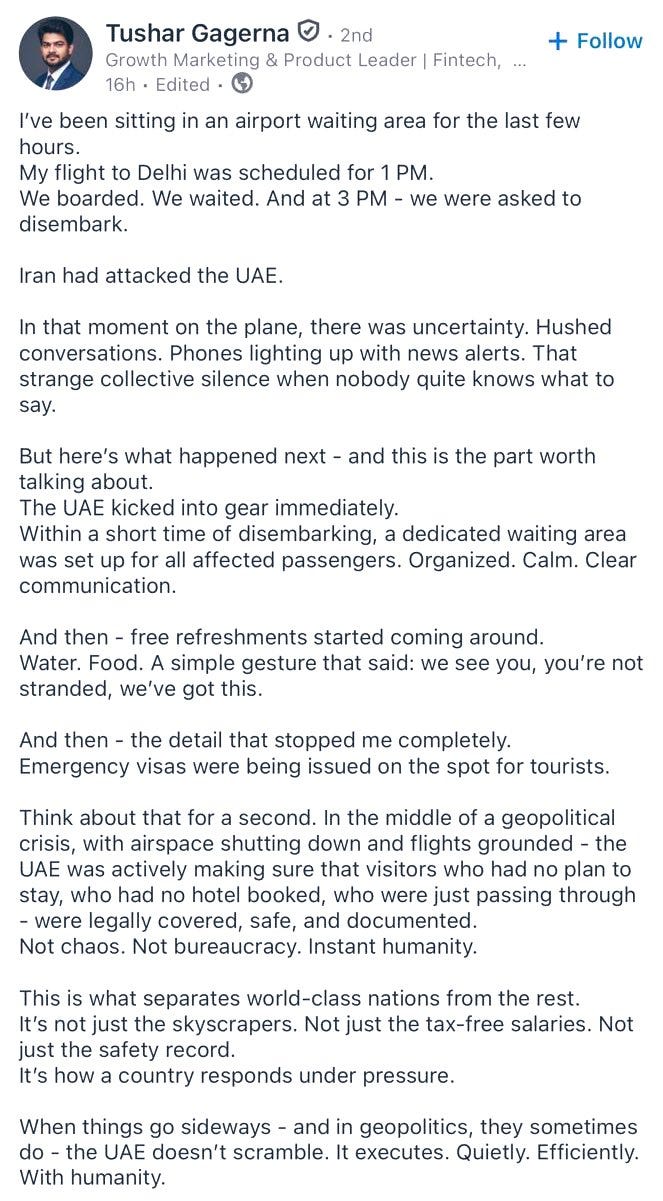
I would like to share the experience here of mr Tushar. It’s a story of how UAE and its aviation hubs, transform a geopolitical crisis into a powerful demonstration of brand trust.
It’s totally different from what happens here in Netherlands when the non happy flow is disturbed, I can remember these 2 recent cases in the Netherlands.
Rotterdam Airport : Because of strict local noise ordinances and “curfew” rules, when flights were delayed into the late evening, the airport essentially “timed out.” Passengers were famously told they couldn’t stay in the terminal and were sent outside, often into the snow/cold to find their own transport or hotels, as the airport simply closed its doors for the night and even recommended to stranded passengers best to stay in the parking lot. Really happened not long ago.
Schiphol: Just very recently, Schiphol faced a massive de-icing fluid shortage and a bottleneck that grounded over 3,200 flights. Passengers were left waiting on planes for hours only to be de-planed back into a terminal that was already at capacity. The advice given was often: “If your flight is cancelled, please leave the airport and go home.” For international transit passengers, that wasn’t an option, leading to the sight of hundreds sleeping on cots with very limited services available in the terminal and for a long time a total blackout on communicatinon of what to do. Now compare that with the experience of Tushar in the UAE.
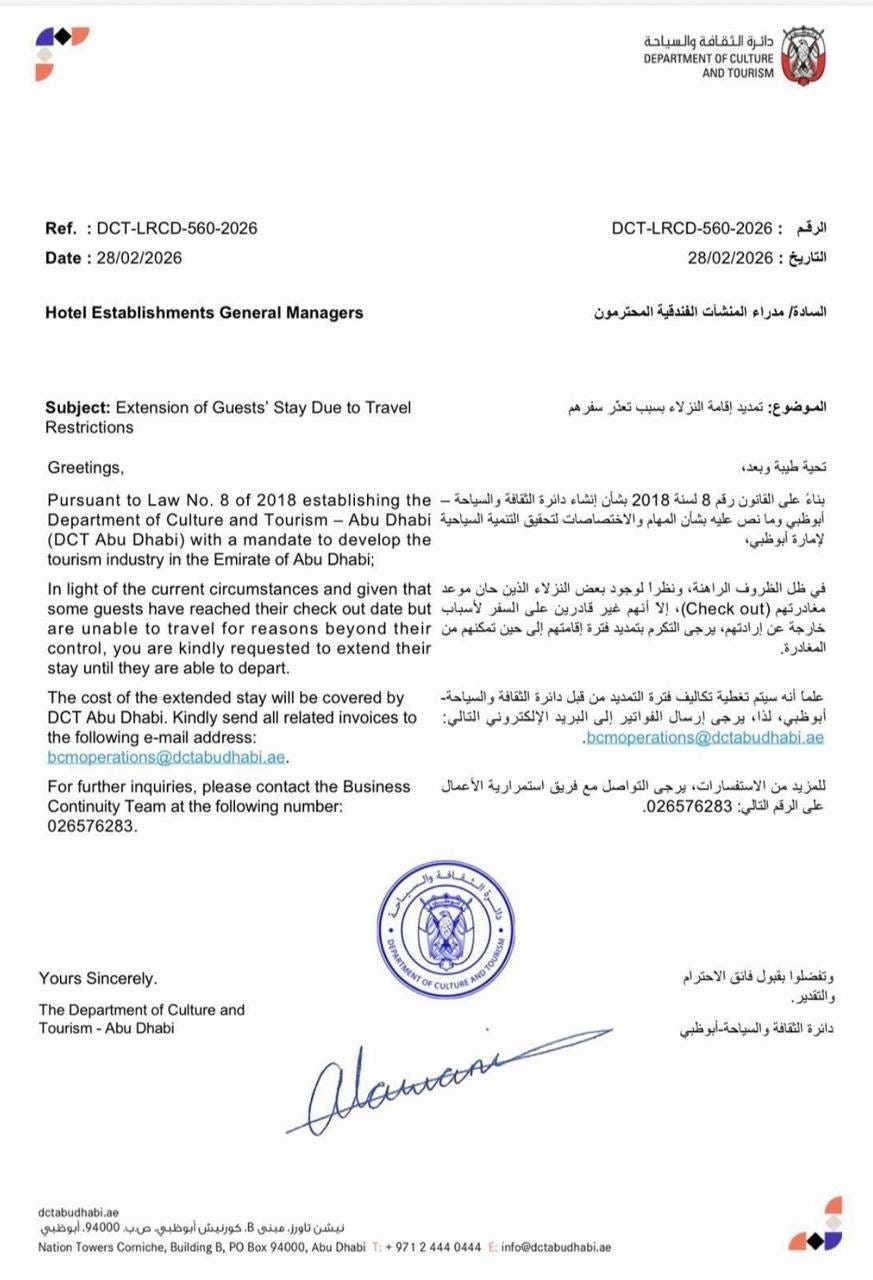
I think it’s really cool to have the flexibility, low level autonomy, and processes in a global aviation hub to respond like these airports in the UAE, do in the middle of a huge crisis.
Would be great to work for organisations that are so customer/passenger friendly.
Thank you for reading!
That’s it for this edition. Next edition might be from Asia or maybe not. Let’s see how far I get.
Take care, be safe
Slowly I am considering new opportunities (also international):
Contact me via LinkedIN → https://www.linkedin.com/m/in/alexbaar/
Checkout my archive of previous newsletters if you want to read more :