

Goodmorning everyone! Thank you for reading my newsletter. Thanks a million!
Welcome all new subscribers!
Let’s dive into the global marketing and retail news from this week:
🇨🇳 The “Doubao Assistant” full agentic takeover of your phone
Wow, look at this! The Doubao assistant from Bytedance, China. Will this be the future of phone usage? If that’s the case (which I can imagine), a lot of traditional screen based UX will become less important.
The Doubao Assistant is how to say, a digital assistant, a butler. But this goes way beyon what we have seen so far in the West.
It’s like if Siri or Google Assistant evolved into a full-AI agent, that does the work, not just suggests it.
Just look at the demo, it’s what’s coming and will have impact on app and web experiences.
This is a battle just starting. China has a few major e-commerce players and you see in this case -again, it happened before- they work against each other because WeChat has blocked access from Doubao Assistant to it’s ecosystem. Just like Amazon blocks third party agent access (unlike WalMart).
We are watching the birth of the agentic layer in real time, it’s going to be one of the bumpiest, most protectionist tech transitions ever.
Watch the video it’s amazing!🤩🤩
🇺🇸 From affiliate marketing to flexible storefronts
Nice idea! flexibile storefront for creators. Sephora build just that.
Unlike for example China with their superapps ecosystem, in the West that’s not the case, so how do you make it easier to shop from social posts? With flexible storefronts.
No more affiliate links. Creators now curate personalized shops inside Sephora.com, driving 4-6x higher engagement and keeping everything seamless for shoppers.
I think a mart way of trying to get back control from walled-garden shops like TikTok Shop, Instagram Shopping, and “Amazon’s influencer storefronts” (that are also pretty nicely setup), where the risk is losing the full customer journey (and data) to platform fees, algorithms, and impulse-buy distractions.
Application to the My Sephora Storefront program is open only in the U.S. to creators who have at least 3,000 followers on either YouTube, TikTok or Instagram. According to Mitchell, Sephora will offer participants a 15% commission with a 15-day attribution window.
Details: https://creators.sephora.com/
🇺🇸 Meta Agency Awards: Best ad campaigns takeaways
I share here again a video of Dara Denney, also for myself to remember some takeouts for when I need them in daily work, I can easily refer back to it. This video is on Meta’s best ads awards and it gives insights on how to create well performing ads. I share here some takeouts and screenshots for mine and your convenience:
Performance campaign of the year (heretic perfume & nosferatu)
Success was attributed to creative diversity, utilizing a range of assets rather than just two or three (AndroMeda).
The assets included creator content and shorter clips borrowed from the film.
The top-performing ad was a piece of creator content.
The messaging was bang-on for the target persona.
Content at every touch point was part of a cohesive brand universe.
The PR push behind the Nosferatu film served as an important top-of-funnel awareness generator.
Best Use of AI (monks and headspace)
AI was utilized in some capacity at every single point in the creative production process, including research, briefing, pre-production, production, post-production, and asset analysis. (see screenshots below)
The agency created 460 campaign assets for this single campaign, which spanned 20 different unique use cases. Very nice and great for AndroMeda. Tip for everyone to focus on creative diversity!
This massive asset production took only one-third the amount of time of a normal production cycle.
The campaign achieved strong results, including a 62% increase in conversion rate and 13% more signups.
Success was driven by a combination of: offering personalized creative options that addressed a wide, wide range of relatable use cases.
Best Creator Campaign (dentsu and chili’s)
The campaign utilized a high-reach offering called a “Meta Moment Maker”.
Meta Moment Maker campaigns are designed to deliver high-impact, short burst media activations to maximize reach, share of voice, and brand outcomes during key moments.
These activations drive audience saturation across Stories, Reels, and in-stream video, typically within a short flight (e.g., 3 days).
Using great creator content combined with partnership ads under the Meta Moment Maker umbrella, the campaign was able to reach 46 million people.
Reels Campaign of the Year (thrive and build-a-bear)
Problem: The core challenge was using digital advertising to effectively drive in-store retail traffic. I always like these use cases, if you also do, read on😉
Goal: Strategically convince people on social media to go to a physical Build-A-Bear location.
Results: Achieved a 14:1 return on retail investment (ROI), measured through a geo holdout study.
The creative developed was entirely UGC (User-Generated Content).
The campaign utilized compilations of UGC to show different unique use cases, demonstrating the versatility of the experience.
Specific unique use cases showcased included: online shopping, birthdays, a rainy day activity, a personal experience of choosing a bear, Valentine’s Day, and a spring break activity. The creative had a low-fi look, intentionally feeling like real parents recording their children.
Dara points out:
.A key strategic question for brands derived from this success is:
“How do your customers create and share digital moments?”


🤖Sistrix blog on AI mentions/citations
In short (check link for all the details)
Answer-centric content design: (The Listicle. The Step-By-Step Tutorial. Data Collection (comparison tools and table). The FAQ block).
Explicit authority and recency: The Trustworthiness Stamp (authority). The Freshness Signal.
Strict machine readability: The Digital Identification (meta data). The Roadmap (table of contents). The Chapters (logical division).
The outcome is surprisingly clear: what counts is not the topic or budget; the common ground is the structure.
Web pages that are cited by AIs are not linear texts, they are databases of responses. They use a clear structure to signal to the AI: “I am a trustworthy, up-to-date source and this is your answer, already perfectly segmented.“
A citation is the small link symbol that the AI Mode places at the end of a sentence or paragraph. It works similarly to a footnote and indicates which website was used as a source for the previously given information.
A mention (brand reference), on the other hand, is the referencing by name of your brand, product or website directly in the text of the AI response (e.g. “we recommend experts such as CNET…“)
While a mention oftentimes presumes an existing high brand authority, the citation is the fundamental, technically optimised way to be recognised as a trustworthy source.
🌐Intercultural communication: building trust
As you know in e-commerce: Trust sells.
I think cultural differences in a broad way, is a very, very interesting topic, so I always like to learn of best practices in that.
Just found this short pod (30 min) on this topic.
I highlight a few takeouts. Information you can use when you are a marketplace seller in sourcing, but also you can use it when you develop a business or international advertising or UI strategy.
Trust across cultures is not only about how much people trust others in general, but also how difficult it is to enter that circle of trust. Some countries show high generalized trust, yet have a very narrow trust radius, meaning outsiders need significant time, effort, and relationship-building before being trusted. Others may start with lower trust, but allow trust to grow faster through demonstrated actions and cooperation. Trust radius matters more than trust level.
Trust radius = how wide the circle is that people allow into trust after interaction.
A country can have high generalized trust but a very narrow trust radius.
Listen to the pod for examples. I think very interesting so after a first interaction a question could be: How can I expand the trust ratio?
The five aspects of trust (as defined in the podcast)
Format of cooperation
Whether trust can be built transactionally or requires relationship-building and physical presence. This has impact on the time to market.Grounds of trust
Whether a culture “loans” initial trust (Sweden, Denmark) or requires it to be earned before cooperation.Rank sensitivity (power distance)
How important titles, hierarchy, and seniority are in building trust and starting talks.Trust transferability
Whether trust transfers between colleagues and representatives of the same company.Time to market
How trust affects the speed at which negotiations and cooperation can realistically begin.
Some citations from the podcast:
In the Caucasus, hospitality is primarily a social norm and matter of politeness, not an indicator of trust or business commitment. Being invited for food, drinks, or generous hosting is expected behavior and does not signal a deeper relationship or readiness to cooperate. In contrast, in Ukraine hospitality usually functions as a result of trust, not a starting point. Inviting someone to a restaurant or home typically happens after communication and interaction, and acts as a gift and signal of established trust, not just courtesy.
In neutral cultures (e.g. Germany, Austria, Nordics, United States, Japan), emotions are expected to be controlled in professional settings. Expressing frustration or strong emotion during negotiations is often perceived as unprofessional and can harm credibility, regardless of good intentions. In affective cultures (e.g. Ukraine, Romania, Italy, Turkey, Spain), emotional expression serves as a signal of engagement, trust, and willingness to cooperate. In these cultures, showing little or no emotion may appear unusual and can be interpreted as disinterest, distance, or suspicion.
More on this topic? I wrote earlier about “Erin Meyers, cultural insights” here:
https://www.crossborderalex.com/p/global-digital-marketing-and-retail-ed21
and here:
https://www.crossborderalex.com/p/global-digital-marketing-and-retail-ed52
🗲 Disruption Beats legacy -yeah!!-
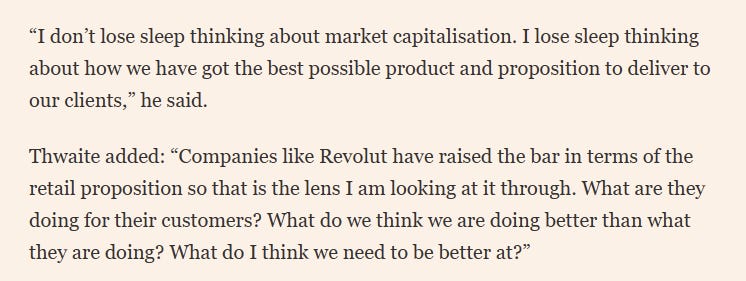
I have little sympathy for traditional banks. For decades they extracted large profits from their customers while delivering slow, uninspiring products. Innovation was minimal, customer experience was secondary, and arrogance often replaced urgency.
That is why I genuinely like the disruption happening in financial services today. Companies like Revolut (my favorite) have shown what is possible when you start with technology, customer experience, and speed as first principles.
Reading the FT article this week, I found it telling that a traditional bank CEOs now openly acknowledge that fintechs have “raised the bar” for product quality.
Would they be able to catchup? I don’t think so.
Details: https://www.ft.com/content/1e333c04-147f-41dd-be0b-b24589be87e2
😅Time for a smile: kudo’s for a creator
Whoever created these, deserves success! Great, great idea!
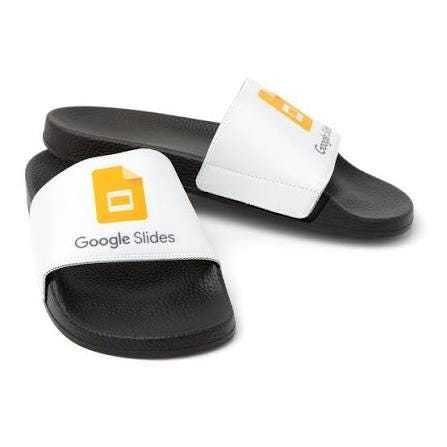
Etsy has them: https://www.etsy.com/listing/1301062432/google-slides-slides-funny-unisex-slip
Thank you so much for reading, liking and subscribing! I wish you all a great day and hope you liked this edition.
Alex
🫡Open to new opportunities
Thanks for reading, liking and subscribing, it means a lot to me! Hope you liked it. Slowly I am considering new opportunities (also international):
Contact me via LinkedIN → https://www.linkedin.com/m/in/alexbaar/
Checkout my archive of previous newsletters if you want to read more :